Afro-textured hair · Istanbul
Afro Hair Transplant in Turkey
An Afro hair transplant moves follicles from the back of the scalp to thinning areas, using an extraction method adapted to hair that curls beneath the skin as well as above it. At Graftiva, our hair transplant clinic in Istanbul, a doctor experienced in Afro-textured hair examines your donor area, plans every case and opens every recipient channel himself.

Clinically reviewed by Dr. Harun Eymen Alakaya, MD, hair restoration physician
Key facts
- Techniques
- Sapphire FUE, DHI or both
- Anaesthesia
- Needle-free numbing, then local
- Procedure
- 6 to 8 hours, one day
- Time in Istanbul
- 3 days
- New growth
- From month 3 to 5
- Final result
- 12 to 18 months
- Price
- From $2,500 / €2,000, no Afro surcharge
- Lead doctor
- Dr. Harun Eymen Alakaya, MD
Quick answers
Afro hair transplant in Turkey: the short version
Can Afro hair be transplanted?
Yes. Afro-textured hair transplants well when the hair loss is stable, the donor area at the back is healthy and extraction is adapted to the curved follicle.
What makes it different?
The curl starts inside the follicle, below the skin. A punch that follows only the visible hair can cut the root, so extraction is slower and adjusted graft by graft.
Which technique is used?
Every case starts with FUE extraction. Channels are then opened with a sapphire blade, grafts are placed with a DHI pen, or both, depending on the area.
How much does it cost?
Our packages start at $2,500 / €2,000. There is no Afro surcharge, and the package price does not change with the number of grafts.
When will I see results?
New hair usually starts between months 3 and 5. Coiled hair grows close to the scalp, so the final result is judged at 12 to 18 months.
Is it safe for darker skin?
We ask about keloids, scars and bumps at the nape before you book and examine them at the clinic. If the risk is too high, we say so.
Video summary
Afro hair transplant in 60 seconds
Why a curl that starts below the skin changes the way grafts are taken, what we ask about keloids and scarring before you book, and how the year after surgery unfolds. The video follows the facts on this page, so you can watch first and read the detail after.
In this video
Read the transcript
Afro-textured hair can be transplanted. It simply needs a different approach. In tightly curled hair, the curl starts below the skin. The follicle itself is bent, so a punch that follows only the visible hair can cut the root. So we slow down. The doctor reads the angle of each hair, sets the punch and depth for you, and takes grafts one at a time into a chilled holding solution. Then Dr. Alakaya opens every recipient channel himself, following the direction of the curl. Darker skin heals differently, so we ask about keloids, scars and bumps at the nape before we talk about grafts. Most patients spend three days in Istanbul. New hair appears from month 3 to 5, and the final result comes at 12 to 18 months. Packages start at $2,500, with no Afro surcharge. Start with a free hair analysis at Graftiva.
Why it is different
Why Afro-textured hair needs a different approach
The differences are below the skin and in the skin itself, not only in the curl you can see.
Follicle
The curl starts at the root
In tightly curled hair the follicle and the bulb at its base are themselves bent, so the hair is curved before it ever reaches the surface.[1] A straight punch aimed along the visible hair can cut a root that bends away underneath.
Extraction
No single punch fits every scalp
Punches differ in shape, size and edge, and no one design suits every patient.[4] For coiled hair we choose the punch and the depth for your follicles and your skin, not from a standard setting.
Afro-textured hair is often less dense than straight hair, which is why every graft counts. In a 2001 study, African volunteers averaged 190 hairs per square centimetre against 227 in Caucasian volunteers, and their hair grew more slowly, about 256 against 396 micrometres a day.[12] In a 2025 study of 122 South African adults with natural Afro-textured hair, average density was 139.1 hairs per square centimetre.[13]
The upside of the curl: coiled hair covers more scalp per strand, so a natural-looking result can sit at a lower density than straight hair needs. The supply is still finite, which is why we plan the donor area conservatively.
In coiled hair the curve continues under the skin, so I never judge a follicle only by the hair I can see. Before the first graft is taken, we study how your hair leaves the scalp and set the punch and the depth for you.
Dr. Harun Eymen Alakaya, MDHair Restoration Physician, Graftiva ClinicCandidacy
Is an Afro hair transplant right for you?
Hair texture alone never decides it. These are the questions the doctor answers when he reviews your photos and examines you in Istanbul.
Usually a good candidate
- Pattern hair loss at the hairline, temples or crown
- Hair loss that is stable or under treatment
- Healthy, dense hair at the back and sides of the scalp
- Edges lost to traction years ago that have not grown back since the tension stopped
- Realistic goals: a natural hairline and solid coverage rather than maximum density
Wait, or not suitable
- Traction that is still happening: tight braids, weaves or locs pulling at the edges
- Active scarring hair loss such as CCCA, with tenderness, scaling or a spreading patch
- A strong tendency to form keloids, after examination
- Thinning that includes the donor area at the back and sides
- Recent shedding after illness, childbirth or new medication, which often recovers on its own
If surgery is not the right step yet, we tell you before you travel and explain what would need to change first.
Before you book
Skin and scar screening for darker skin
Every hair transplant leaves small wounds that must heal well. In darker skin the questions about scarring and pigmentation come first, so we ask them before we talk about grafts.[6,7]
Bumps and scarring at the back of the neck matter here. In a 2007 study of 874 adults in Cape Town, acne keloidalis nuchae, a scarring condition of the nape, was found in 10.5% of men and 0.3% of women.[14]
If any answer is yes, the doctor examines the area at the clinic before the plan is confirmed. Depending on what he finds, he may adjust where grafts are taken from, suggest a small test session first to see how your skin heals, or advise against surgery.
What we ask you
- Have you, or a close relative, ever formed a keloid?
- How did old scars heal, such as ear piercings, cuts or previous surgery?
- Do you get bumps or scarring at the back of the neck, or razor bumps after a close cut?
- Do dark marks stay after spots, cuts or irritation?
- Have you had any scalp condition, a previous hair transplant or scalp surgery?
- Which hairstyles do you wear, and how tight are they?
Our method
How we extract curved follicles
Extraction is where grafts are kept or lost in coiled hair. Damage to a follicle is not visible on the day; it shows months later as hair that never grows. So we slow down.
Step 1
Read the follicle
The doctor studies the curl, the angle at which hairs leave the skin and how thick and firm your scalp is.
Step 2
Choose the punch
A slightly wider punch, up to about 1.3 mm, is used where the curve needs room, with a shallow first cut to free the top of the follicle.[4,5]
Step 3
Follow each hair
Grafts are taken one at a time at the angle of each hair, by hand where the curl demands it, and spread across the donor area.
Step 4
Protect the grafts
Each graft goes straight into a chilled holding solution (IceGraft), is counted and sorted by the number of hairs, and is checked under magnification.
Step 5
Doctor-made channels
Dr. Alakaya opens every recipient channel himself, matching the angle and direction of the curl around it.
Step 6
Placement
Grafts are placed into the channels, or with a DHI pen in selected areas, following the planned hairline and direction.
We do not plan Afro cases by grafts per hour, and each doctor treats at most two patients a day. Extraction takes longer than in straight hair, and the schedule allows for it.
I open every recipient channel in an Afro case myself, because the angle has to follow the curl of the hair around it. A channel that fights the natural direction is something you would see every time you look in the mirror.
Dr. Harun Eymen Alakaya, MDHair Restoration Physician, Graftiva ClinicTechnique
Sapphire FUE or DHI for Afro hair?
Both begin with the same FUE extraction, which is the difficult step in coiled hair.[5] They differ in how the grafts are placed, and neither is better for every case.
| Approach | When we use it for Afro hair | What to know |
|---|---|---|
| Sapphire FUE | Larger areas, the crown and most frontal cases | A fine sapphire blade opens channels sized to the bulkier grafts of coiled hair |
| DHI | The front edge of the hairline, small areas between existing hair, women who keep their length | Curved, bulky grafts are harder to load into the pen, so DHI is used where the grafts suit it |
| Combined | Cases that need a precise front edge and wider coverage behind it | DHI along the hairline, Sapphire FUE for the rest |
The doctor confirms the approach after examining you. Read more in our guides to who does what during surgery.
For women
Afro hair transplant for women: edges, crown and thinning
Hair loss in women with Afro-textured hair often has a cause that has to be dealt with before surgery. Two questions decide the answer: has the cause stopped, and are the follicles still there?[10]
Edges and temples
Thinning from braids, weaves or tight styles
Traction alopecia is common in women of colour and often overlooked.[8,9]
- Early stage, follicles still present: stop the tension first; hair can regrow
- Late stage, smooth edges with no regrowth: a transplant can restore the edges if the donor area is healthy
- The tension must not return on the new hair
Crown
Thinning that spreads from the top (CCCA)
CCCA is a scarring hair loss that needs medical treatment to settle the inflammation.[11]
- Active disease: treatment first, surgery waits
- We usually ask for at least 9 to 12 months of treatment
- Quiet under treatment: a small test session comes first
- Please send your dermatologist’s notes with your photos
Top of the scalp
Diffuse thinning (female pattern hair loss)
Suitable when the back and sides stay dense and stable.
- Planned around the hair you already have
- DHI or long-hair options for women who keep their length, in selected cases
- Shedding after childbirth or illness usually recovers without surgery
These causes are common. In the same Cape Town study of 874 adults, traction alopecia was found in 31.7% of women and 2.2% of men, and CCCA in 2.7% of women.[14] In a 2007 study of 1,042 schoolchildren, traction alopecia among girls rose from 8.6% in the first school year to 21.7% in the last year of high school.[15]
When a woman shows me thinning edges, my first question is not how many grafts she needs but whether the pulling has stopped. If the cause is still active, we treat that first, because new grafts would face the same tension.
Dr. Harun Eymen Alakaya, MDHair Restoration Physician, Graftiva ClinicHairline design
A hairline drawn for coiled hair
Your hairline is drawn with you on the morning of surgery by our hairline design specialist, on the plan agreed with the doctor. Many of our patients with Afro-textured hair ask for a straighter, more defined line with squarer temple corners, and the curl lets that line look full at a lower density.
We also plan for the future: the hair behind a new hairline can keep thinning, so the line is set where it will still suit you in ten years.[2]
If you wear a fade
What the donor area looks like with a short cut
FUE leaves small round marks where grafts were taken. The punches used for coiled hair are a little wider, so the marks are a little larger. In our experience they blend into darker skin, and a number 1 or 2 guard usually hides them once healed.
A skin fade in the first months after surgery is not realistic, and a very low fade may show the donor area. Tell us how you wear your hair and we will plan the extraction around it.
Your Afro team
The people who will treat you
Afro cases are planned and carried out by team members with particular experience in curly and coiled hair.
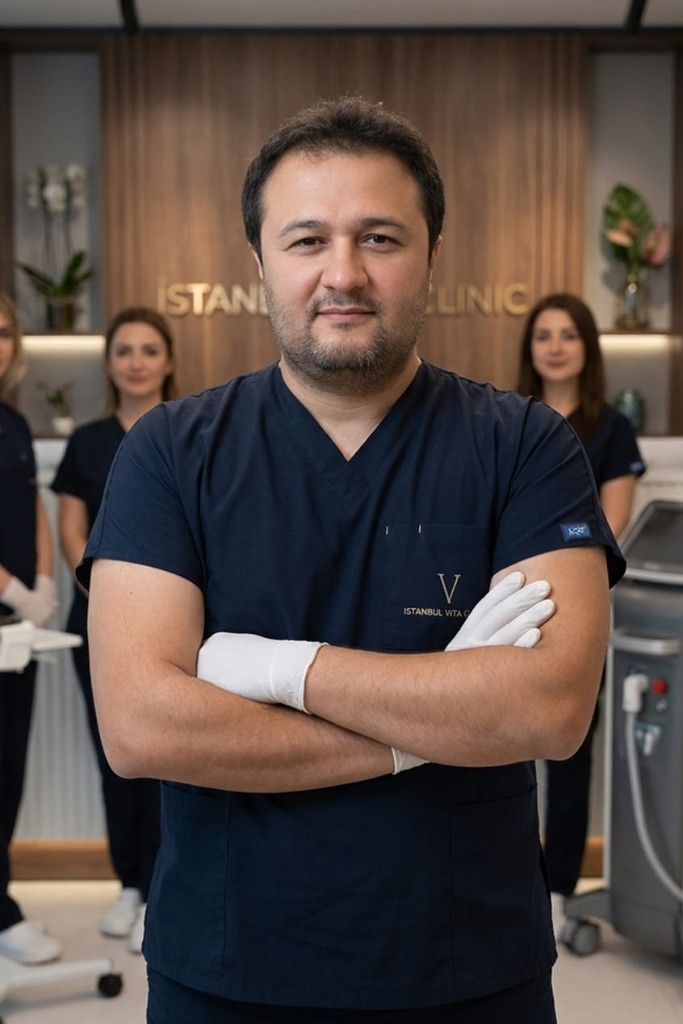
Lead doctor
Dr. Harun Eymen Alakaya, MD
Examines you, confirms the plan and opens every recipient channel. More than 12,000 procedures since 2011, with a focus on Afro-textured hair.
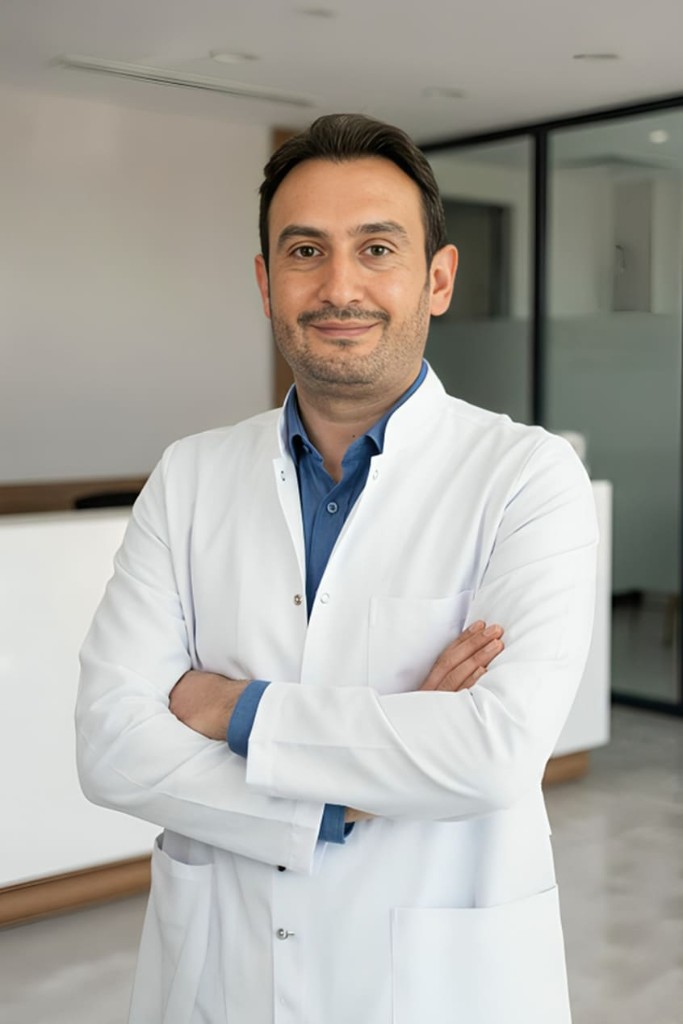
Treatment planning
Mustafa Ayhan Balcı
Assesses donor capacity, curl pattern and hairline needs. More than 10,000 procedures across many hair types.
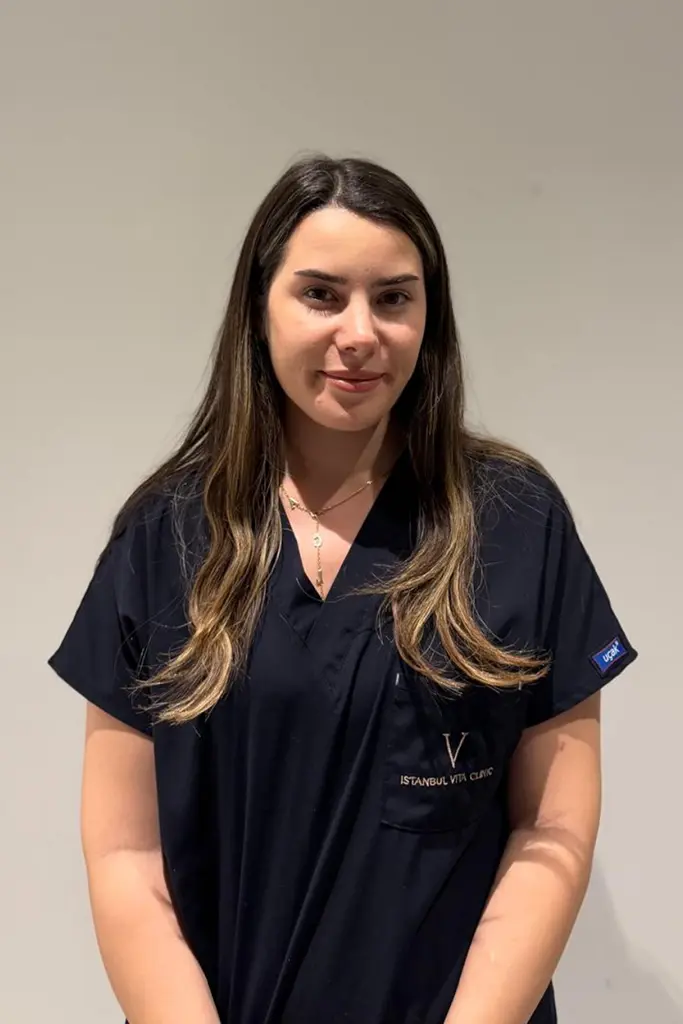
Graft extraction
Çağlanur Oğuz
Senior graft extraction specialist with 11 years of experience and a focus on Afro and curly hair.
Your day
What happens on the day of surgery
| When | What happens |
|---|---|
| Before you fly | The doctor reviews your photos and sends a plan with an estimated graft range. We ask about keloids, scalp conditions, medication and your usual hairstyle. |
| Morning | A 40 to 60 minute consultation with the doctor, EKG and blood tests, the hairline drawn and agreed with you, photos, and shaving as planned. |
| Anaesthesia | Needle-free numbing, then local anaesthesia. Sedation is available in the Deluxe package after a medical assessment. |
| Procedure | Extraction, channel opening by the doctor and placement, with breaks for meals and rest. Usually 6 to 8 hours. |
| Next day | Check-up and your first wash at the clinic, with written aftercare instructions. |
| Going home | Most patients fly home after 2 to 3 nights, with 12 months of online follow-up and medical assistance available 24/7. |
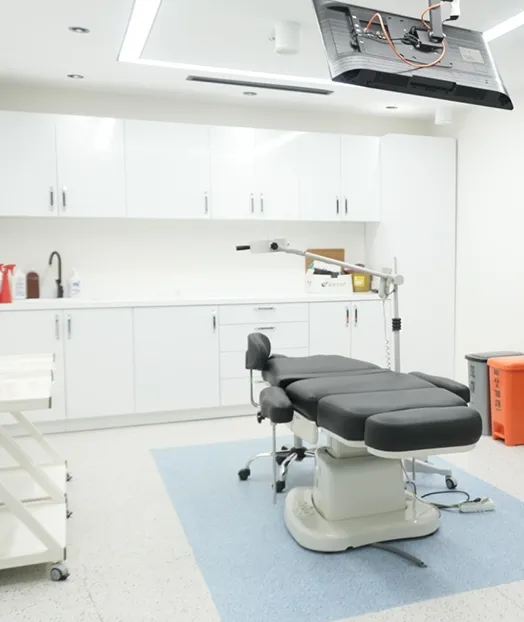
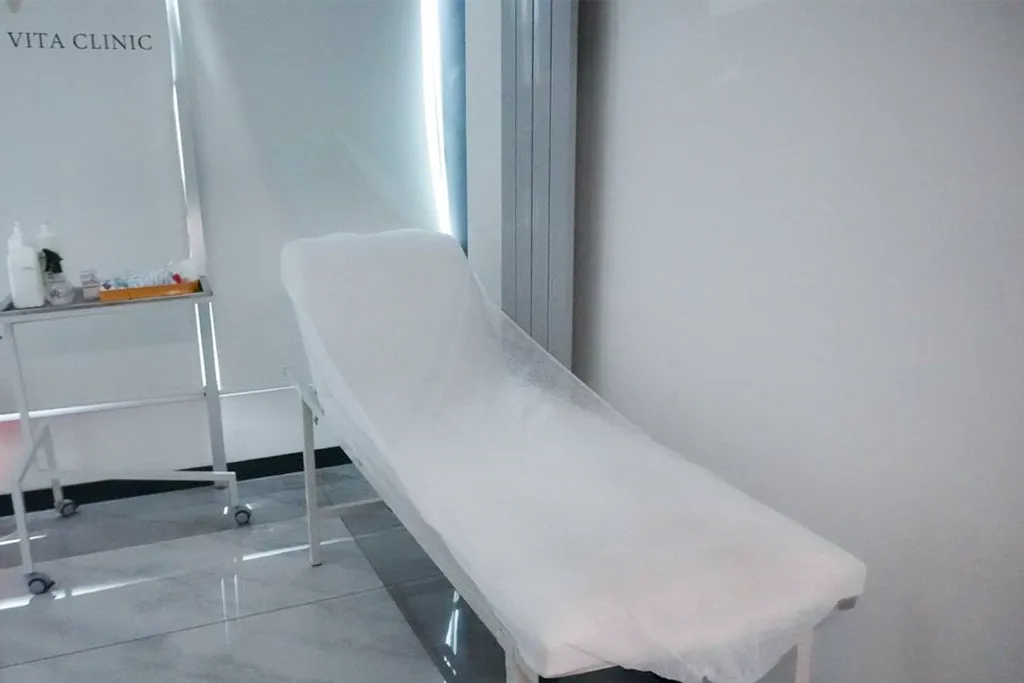
Everything takes place in one licensed clinic in Ataşehir. See the clinic and its operating rooms.
Recovery
Recovery and styling timeline for Afro-textured hair
The healing steps are the same for every hair type. What changes is how long the curl hides the growth, and how careful you need to be with your skin and your styling.
| When | What to expect | What you do |
|---|---|---|
| Days 0–3 | Mild swelling of the forehead is common; grafts are most fragile | Sleep with your head raised; do not touch the grafts |
| Week 1–2 | First wash at the clinic; small crusts form and are usually gone by days 10–14 | Wash gently as instructed; light exercise from about day 10 |
| Weeks 2–8 | Most transplanted hairs shed. This is expected | Full training from week 4; no sauna or pool for a month; keep the scalp out of direct sun |
| Months 3–9 | New growth starts. It may look finer and shorter at first, because coiled hair sits close to the scalp | Send your follow-up photos; use sunscreen on the scalp once the crusts are gone |
| Months 12–18 | Final result | Final photos; plan a second session only if it was part of your plan |
Styling rules
- No braids, locs, weaves, wigs or tight styles pulling on the transplanted area until the doctor confirms the grafts are established
- No relaxer or chemical straightening on the new hair until the doctor clears it
- Ask at your follow-up before colouring or a close clipper cut
Protect your skin
Dark marks after inflammation are more common and last longer in darker skin.[7] Sun on a healing scalp is the trigger you can control most, so keep the scalp covered or shaded in the first months and use sunscreen once the crusts have gone.
Results
How to read Afro before and after photos
Results vary between patients, and photos of coiled hair are easy to misread. When you look at any clinic’s cases, check these points:
- The month of the after photo. A photo at month 6 shows a fraction of the final result.
- The hairline, not just volume. Look at the shape, the temple corners and how the first rows sit.
- Length and styling. Coiled hair hides length; compare photos taken at a similar length and dry.
- Same angle and light. Flash and wet hair change how density looks.
- The details. A useful case lists the area treated, the technique, the graft count and the hair-loss stage.
Cost
Afro hair transplant cost in Turkey (2026)
We price by package, not per graft. The price is the same for Afro-textured hair, and it does not change if the doctor adjusts the graft count during your consultation.
| Package | USA & Canada | Europe | Main differences |
|---|---|---|---|
| Standard | $2,500 | €2,000 | Treatment, health checks, aftercare and 12-month follow-up; hotel and transfers not included |
| Premium | $3,200 | €2,800 | Adds hotel stay and VIP airport, hotel and clinic transfers |
| Deluxe | $4,000 | €3,500 | Adds sedation when medically suitable, stem cell therapy and a 5-star hotel |
Included in every package
- Doctor consultation, EKG and blood tests
- Sapphire FUE, DHI or combined, as planned
- PRP and mesotherapy, two oxygen therapy sessions
- Aftercare package and first wash at the clinic
- Graft Guarantee Certificate
- 12 months of online follow-up and 24/7 medical assistance
- In-clinic translator
Not included
- Flights
- Extra hotel nights or room upgrades
- Companion expenses
- Meals outside the hotel package and personal travel costs
Your written quotation lists exactly what is included before you pay anything.
Choosing a clinic
Questions to ask any clinic before you book
Whichever clinic you choose, these answers tell you more than a price or a graft number. Ask them to us too.
- Who extracts the grafts, and how many Afro-textured cases have they done?
- Will a doctor examine my donor area in person before the plan is final?
- How do you adapt extraction to curved follicles?
- How do you check my risk of keloids and dark marks?
- Is there an Afro surcharge, and does the price change with the graft count?
- Can I see Afro cases with the graft count, technique and month of the photo?
- Who follows my recovery after I fly home, and for how long?
Real results
Afro hair transplant before and after
Afro-textured results from our Istanbul clinic, in men and women. Coily hair covers more scalp per graft, so look at how full each result looks for its graft count.
GFV-0002Afro-textured
3,500 Grafts Sapphire FUE
GFV-0006Afro-textured
3,000 Grafts Sapphire FUE
GFV-0012Afro-textured
3,500 Grafts Sapphire FUE
GFV-0007WomenAfro-textured
3,500 Grafts Sapphire FUE
Individual results vary. Faces are blurred for privacy; the hair is not retouched.
FAQ
Afro hair transplant: frequently asked questions
Will my transplanted hair stay curly?
Yes. The curl is shaped by the follicle itself, so transplanted hair grows with the texture of the donor hair. The first new hairs often look finer and straighter, and the full curl settles as they mature.
How many grafts will I need?
There is no fixed number for Afro hair. It depends on the area, your donor density and the result you want. The doctor gives an estimated range from your photos and confirms it when he examines you. Because coiled hair covers more scalp per strand, a natural result often needs fewer grafts than straight hair, but the donor supply is also limited.
Is FUE or DHI better for Afro hair?
Neither is better for every case. Both begin with FUE extraction, which is the difficult step in coiled hair. Sapphire FUE suits larger areas and the crown; DHI suits the front edge and small areas between existing hair. Many cases combine both.
Can I have a hair transplant if I get keloids?
Possibly. Tell us about any keloids in you or your family before you book. The doctor examines old scars at the clinic and may suggest a small test session first. If the risk is too high, we advise against surgery.
I get bumps at the back of my neck. Does that matter?
Yes, tell us. Bumps or scarring at the nape can affect where grafts are taken. The doctor checks this area before planning the donor zone, and some conditions need treatment before surgery.
Can a transplant restore edges lost to braids or weaves?
If the edges are smooth and have not grown back since the tension stopped, a transplant can restore them when the donor area is healthy. If the tension is still there, or the follicles are still present, stopping the pulling comes first.
Can I have a transplant if I have CCCA?
Not while it is active. CCCA needs medical treatment to settle the inflammation, and we usually ask for at least 9 to 12 months of treatment. When it is quiet, a small test session comes first.
When can I braid, wear a wig or relax my hair again?
Not until the doctor confirms the grafts are established at your follow-up. Styles that pull on the transplanted area, and relaxers on the new hair, are the main things to avoid while it settles.
Will the scars show if I wear a short fade?
FUE leaves small round marks that are slightly larger with the punches used for coiled hair. In darker skin they usually blend in, and a number 1 or 2 guard hides them once healed. A skin fade in the first months is not realistic.
Do I need to shave my head?
Not always. Depending on the plan, shaving can be full, partial or limited to the donor area. Women who want to keep their length may be suitable for DHI or long-hair options in selected cases.
Is there an extra charge for Afro hair?
No. Our package prices are the same for Afro-textured hair, and they do not change with the number of grafts or the technique.
How long do I need to stay in Istanbul?
Three days: arrival, the consultation and procedure, and the first wash with a check-up the day after. Most patients fly home after 2 to 3 nights.
Sources
Research behind this page
Medical statements on this page are based on the peer-reviewed sources below, chosen under our editorial policy. Information about how we work comes from our own clinical practice.
- Yoshida H, Taguchi H, Hachiya A, et al. The natural trait of the curvature of human hair is correlated with bending of the hair follicle and hair bulb by a structural disparity in the root sheath. J Dermatol Sci. 2014;75(3):195-199. PubMed
- Epstein J, Bared A, Kuka G. Ethnic considerations in hair restoration surgery. Facial Plast Surg Clin North Am. 2014;22(3):427-437. PubMed
- Epstein JS, Epstein GK, Abdul Al-Awady A. Hair restoration in the ethnic patient. Facial Plast Surg Clin North Am. 2022;30(4):457-469. PubMed
- Gupta AK, Love RP, True RH, Harris JA. Follicular unit excision punches and devices. Dermatol Surg. 2020;46(12):1705-1711. PubMed
- Epstein GK, Epstein J, Nikolic J. Follicular unit excision: current practice and future developments. Facial Plast Surg Clin North Am. 2020;28(2):169-176. PubMed
- Huang C, Wu Z, Du Y, Ogawa R. The epidemiology of keloids. In: Téot L, et al., eds. Textbook on Scar Management. Springer; 2020. Chapter 4. PubMed
- Mar K, Khalid B, Maazi M, et al. Treatment of post-inflammatory hyperpigmentation in skin of colour: a systematic review. J Cutan Med Surg. 2024;28(5):473-480. PubMed
- Larrondo J, McMichael AJ. Traction alopecia. JAMA Dermatol. 2023;159(6):676. PubMed
- Santa Lucia G, Plante J, DeMaio A, et al. Traction alopecia: neglected in women and children of color. J Am Acad Dermatol. 2023;88(2):446-448. PubMed
- Okereke UR, Simmons A, Callender VD. Current and emerging treatment strategies for hair loss in women of color. Int J Womens Dermatol. 2019;5(1):37-45. PubMed
- Jackson T, Sow Y, Dinkins J, et al. Treatment for central centrifugal cicatricial alopecia: Delphi consensus recommendations. J Am Acad Dermatol. 2024;90(6):1182-1189. PubMed
- Loussouarn G. African hair growth parameters. Br J Dermatol. 2001;145(2):294-297. PubMed
- Dlova NC, et al. Baseline trichoscopic values for afro-textured hair in indigenous South Africans show lower density and unique features. Int J Dermatol. 2025;64(6):1057-1065. PubMed
- Khumalo NP, Jessop S, Gumedze F, Ehrlich R. Hairdressing and the prevalence of scalp disease in African adults. Br J Dermatol. 2007;157(5):981-988. PubMed
- Khumalo NP, Jessop S, Gumedze F, Ehrlich R. Hairdressing is associated with scalp disease in African schoolchildren. Br J Dermatol. 2007;157(1):106-110. PubMed
Keep reading
Related information
Clinical care
Medical Standards
Who does what during surgery, safety checks and follow-up.
Read more →
Free hair analysis
Find out how many grafts you need
Answer a few questions about your hair, no photos needed. A doctor reviews your answers and replies with a personal plan.