Technique · Istanbul
DHI Hair Transplant in Turkey
DHI (direct hair implantation) is a way of placing grafts with an implanter pen that opens the skin and sets the graft in one movement. The grafts are still taken with FUE. At Graftiva Clinic in Istanbul we use DHI where that control matters most, such as the hairline and areas between existing hair, and the doctor decides zone by zone whether it is the right tool.
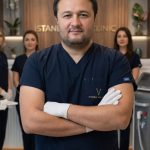
Clinically reviewed by Dr. Harun Eymen Alakaya, MD, hair restoration physician
Key facts
- What it is
- Graft placement with an implanter (Choi) pen
- Extraction
- FUE, the same as other methods
- Often used for
- Hairline, temples, between existing hair
- Implantation led by
- Cihan Atasoy, DHI specialist
- Session
- One day; usually longer than channel-first placement
- Anaesthesia
- Needle-free numbing, then local
- Final result
- 12 to 18 months
- Price
- Packages from $2,500 / €2,000; no DHI surcharge
Quick answers
DHI in Turkey: the short version
Is DHI different from FUE?
Only in how grafts are placed. Grafts are taken with FUE either way; DHI then places them with a pen instead of into channels opened beforehand.
Is DHI better than FUE?
Not for every case. No large head-to-head study shows one placement method gives better growth. Each suits different zones.
Where is DHI most useful?
The front of the hairline, the temples and thinning areas where grafts go between existing hairs. Large bald areas and the crown usually suit opened channels.
Who places the grafts?
The doctor plans every zone. DHI implantation at Graftiva is led by our DHI specialist Cihan Atasoy under the doctor’s plan.
Does DHI cost more?
Not at Graftiva. DHI is included in every package, and the price does not change with the technique or the number of grafts.
Can I keep my hair long?
DHI can place grafts between existing hairs without cutting them, but the donor area still needs trimming. Long-hair options are planned case by case.
Video summary
DHI hair transplant in 60 seconds
How an implanter pen opens the skin and sets each graft in one movement, why the grafts are still taken with FUE, and which parts of the scalp the doctor plans for the pen or for channels. It also covers what the research does and does not show, and how the months after surgery unfold.
In this video
Read the transcript
DHI, or direct hair implantation, changes how grafts go in, not how they come out. Grafts are still taken with FUE. DHI then places them with a pen, instead of into channels opened first. Each graft is loaded into the hollow needle of a Choi pen. It opens the skin and sets the graft in one movement, at an angle set by hand. The doctor plans each zone: a pen for the hairline, temples and gaps between hair, channels for larger areas. Many plans use both. No large study shows one placement method grows better hair. Careful, cool and quick handling matters more. Surgery takes one day. New hair appears from month 3, and the final result comes at 12 to 18 months. Packages start at $2,500, with no DHI surcharge. Start with a free hair analysis at Graftiva.
How DHI works
DHI changes how grafts go in, not how they come out
Every modern hair transplant has two halves: taking grafts from the donor area and placing them in the thinning area. DHI is about the second half only.
The first half: FUE extraction
Grafts are taken one by one from the back and sides of the scalp with a small round punch, whether the plan is DHI or not.[2,3] The size of the punch, the depth of the cut and how evenly grafts are spread decide how the donor area looks later. A clinic that offers “DHI instead of FUE” is describing the same extraction with a different name.
The second half: placement
In channel-first placement, all recipient sites are opened first, for example with a sapphire blade, and grafts are then set into them with fine forceps. With an implanter pen, each graft is loaded into a hollow needle, and the needle makes the opening and leaves the graft behind in one movement.[1] Both are established methods; implanters were introduced in 1992 and spread widely once FUE became common.[1]
Patients often ask me for DHI by name. I explain that the grafts come out the same way either way; what I decide is how each zone is best filled, and in many plans the answer is a pen at the front and channels behind.
Dr. Harun Eymen Alakaya, MDHair Restoration Physician, Graftiva ClinicOur guide to FUE and Sapphire FUE covers extraction and channel opening in detail.
The implanter pen
What the pen actually does, and what it does not
An implanter is a pen-shaped instrument with a hollow, sharp needle and a plunger. It is a hand tool, not a machine: every angle and depth is set by the person holding it.
Loading
One graft per needle
Each graft is slid into the needle tip by an assistant while the implanter works with another pen, so placement can continue without pauses. This team rhythm is part of the method.[4]
Angle and depth
Set by hand, zone by zone
At the hairline, hairs leave the skin at a low angle. Inserting the needle that flat makes grafts more likely to pop back out, so depth control and the direction of insertion matter more there than anywhere else.[4,5] A 2026 biomechanical analysis estimated that the force tending to push a graft back out rises from about 25% at a perpendicular insertion to 90% or more at the 15° angles used near the hairline.[5]
Needle size
Matched to the graft
Pens come with needles of different widths. The tip is chosen to fit the grafts going into each zone: fine for single hairs at the front, wider for multi-hair grafts behind.[4]
Hybrid use
Pens in pre-made sites
Implanters can also be used to place grafts into sites that were opened beforehand, combining the handling of the pen with sites made in advance.[6] In a 2019 series of 104 patients treated this way, the hair loss score improved from severe to mild in 74 of them (71%).[6] Which approach is used in each zone is a clinical decision.
Zone by zone
Where DHI helps, and where opened channels work better
| Area or situation | Why DHI may suit | Why channels may suit better |
|---|---|---|
| Front of the hairline | Fine control of angle and direction, one graft at a time, where every hair is visible | When the hairline is part of a very large session, both may be combined |
| Temples | Low, changing angles that need careful direction | — |
| Between existing hair | Grafts can go between hairs without cutting them, which helps when you keep length on top | If existing hair is very dense, sites may be planned in advance |
| Crown and large bald areas | — | Many grafts over a wide area; opened channels are usually more practical and faster |
| Very curly or Afro-textured hair | Possible for selected areas | Curved, bulky grafts are harder to load into a needle; see our Afro guide |
Implanters first became popular in East Asia, where hair is typically straight and follicular units hold one or two hairs.[1] That is still a good guide: the more uniform and slim the grafts, the more naturally they suit a needle.
The evidence
Is DHI better than FUE? What the evidence actually says
DHI is often sold as the premium option. The published evidence is more modest, and we would rather you hear it from us.
No large, well-controlled trial has shown that implanter placement gives better graft survival or density than forceps placement into opened channels. The literature on implanters is mostly technique reports and small series.[1,4,6]
What reviews do agree on is that grafts survive best when they are kept moist and cool, spend little time outside the body and are handled gently.[8] Those principles apply to every placement method. A pen can reduce handling, but it does not replace a careful team.
In a 2006 study of single-hair grafts placed with an implanter, survival was higher at 20 to 30 grafts per test area than at 40 to 50.[7] Denser is not automatically better.
I would rather tell you what the research does not show than sell you a method name. A pen is useful in the right hands and the right zone, but no study has made it a better technique for everyone.
Dr. Harun Eymen Alakaya, MDHair Restoration Physician, Graftiva Clinic| What you may read | What is actually known |
|---|---|
| “DHI uses a different extraction.” | Grafts are taken with FUE either way. DHI describes placement.[1,2] |
| “DHI has a higher survival rate.” | Not shown in large comparative studies. Handling, time and temperature matter more than the method name.[8] |
| “DHI gives more density.” | Density depends on the donor supply and the plan. Very dense packing can lower survival.[7] |
| “DHI leaves no scars.” | The donor area is the same FUE donor area, with small round marks that usually fade into the hair.[2] |
| “DHI heals faster.” | Both methods leave tiny recipient wounds that crust and heal over about two weeks. The donor area heals the same way. |
| “DHI is always quicker or always slower.” | Speed depends on the team and equipment. A 2026 multicentre study of 612 FUE sessions found extraction and implantation speeds of around 700 grafts an hour, faster when several implanters were used.[9] |
Who does what
The people behind a DHI procedure
DHI depends on teamwork: someone extracts, someone loads, someone implants. Here is how responsibilities are divided at Graftiva.
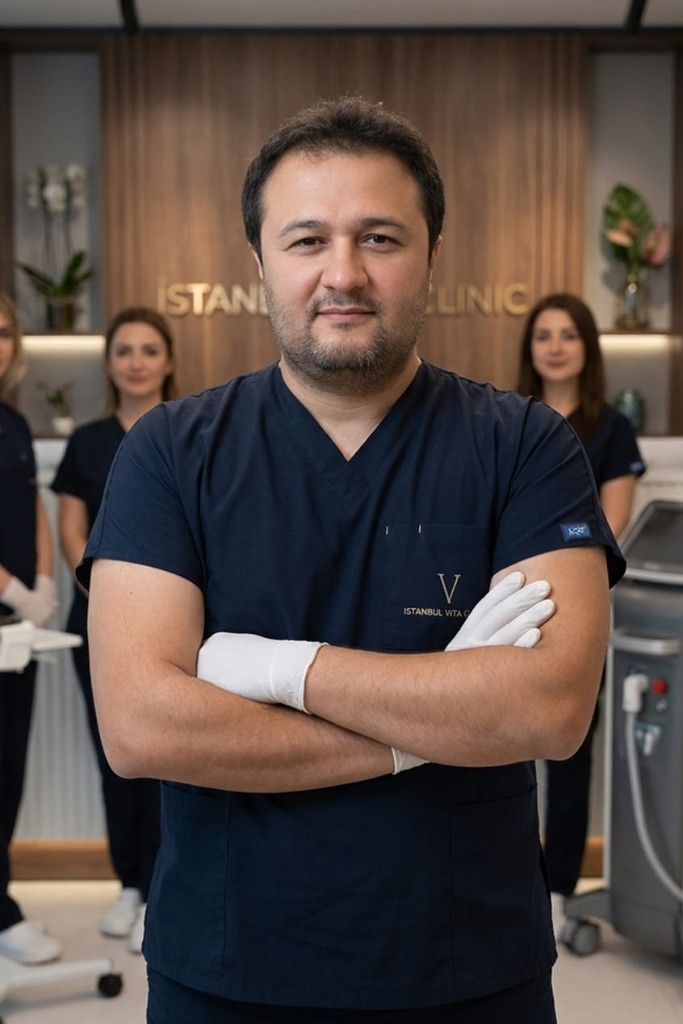
Lead doctor
Dr. Harun Eymen Alakaya, MD
Examines you, decides which zones get DHI and which get channels, and opens every recipient channel himself where channels are used.
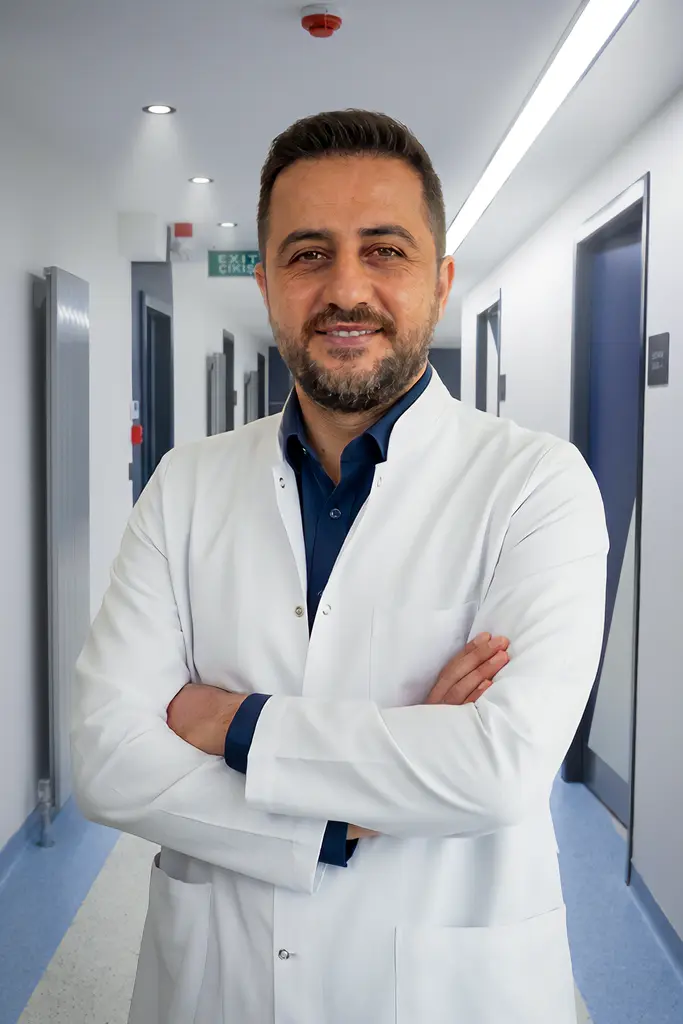
DHI specialist
Cihan Atasoy
Leads DHI implantation and coordinates the team, keeping depth, angle and direction consistent with the plan. Working with DHI since 2011.
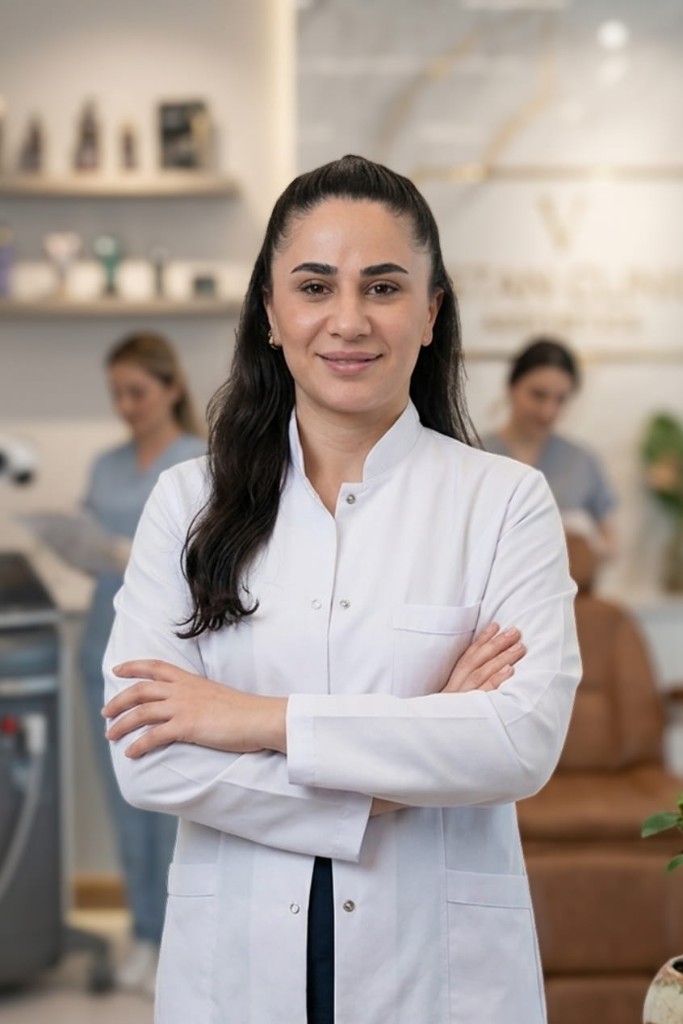
Hairline design
Tuğçe Yılmaz Arslan
Draws the hairline with you on the morning of surgery, on the plan agreed with the doctor.
DHI is only as good as the rhythm between the people loading and placing the grafts. I set the plan zone by zone, and the team works to it; if a zone is better served by channels, I open them myself.
Dr. Harun Eymen Alakaya, MDHair Restoration Physician, Graftiva ClinicEach doctor treats at most two patients a day. Read more about who is responsible for each step.
Keeping length
DHI and longer hair
Because the pen places each graft individually, it can work between existing hairs without cutting them. That makes DHI useful when you want to keep length on top, or when thinning is spread between hair that is still there.
The donor area is a different matter. Grafts are still taken by FUE, so the area they come from has to be trimmed, either fully or in a narrow band that the hair above can cover. How much is trimmed depends on the number of grafts.
Good to know
- Long-hair and unshaven plans usually take longer and suit moderate graft numbers
- Very large sessions are often easier with a shaved donor area
- Women who keep their length often have this kind of plan
Your day
A DHI procedure day, step by step
| When | What happens |
|---|---|
| Before you fly | The doctor reviews your photos and sends a plan, including which areas are likely to get DHI. |
| Morning | A 40 to 60 minute consultation with the doctor, EKG and blood tests, and your hairline drawn and agreed with you. |
| Anaesthesia | Needle-free numbing, then local anaesthesia. Sedation is available in the Deluxe package after a medical assessment. |
| Extraction | Grafts are taken by FUE, counted, sorted by the number of hairs and kept chilled. |
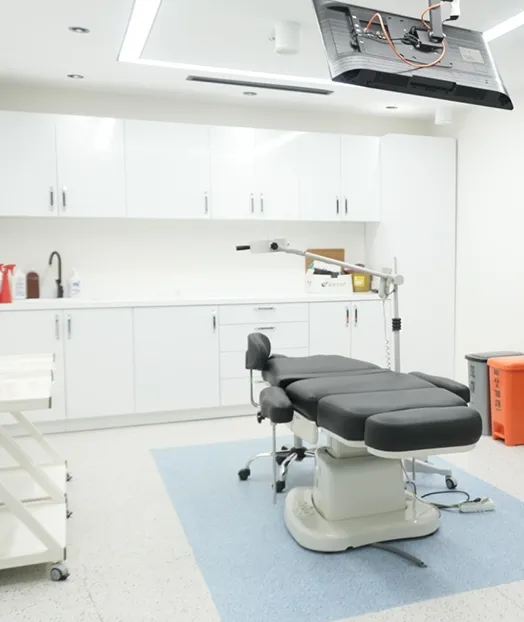
| Implantation | Grafts are loaded into pens and implanted zone by zone, with channels opened by the doctor where the plan uses them. Breaks for meals and rest. |
| Next day | Check-up and first wash at the clinic, with written aftercare instructions. Most patients fly home after 2 to 3 nights. |

Recovery
Recovery after DHI
Healing after DHI follows the same course as other FUE procedures, because the donor area and the small recipient wounds are much the same.
| When | What to expect |
|---|---|
| Days 1–3 | Some swelling of the forehead is common: a 2025 review found it reported in up to 50% of patients. Sleep with your head raised and do not touch the grafts.[10] |
| Days 10–14 | Small crusts are washed off as shown at the clinic. |
| Weeks 2–8 | Most transplanted hairs shed. This is expected; the roots stay. |
| Month 3 | New growth begins, fine at first. |
| Months 6–9 | The most visible change. |
| Months 12–18 | Final result assessed. |
Temporary shedding of existing hair around the treated area is reported in a small share of patients and usually grows back.[10] Light exercise from about day 10, full training from week 4, no sauna or pool for a month.
Cost
DHI hair transplant cost in Turkey (2026)
At Graftiva, DHI is not an upgrade. Every package includes Sapphire FUE, DHI or both, as planned by the doctor, and the price does not change with the technique or the number of grafts.
| Package | USA & Canada | Europe | Main differences |
|---|---|---|---|
| Standard | $2,500 | €2,000 | Treatment, health checks, aftercare and 12-month follow-up |
| Premium | $3,200 | €2,800 | Adds hotel stay and VIP transfers |
| Deluxe | $4,000 | €3,500 | Adds sedation when medically suitable, stem cell therapy and a 5-star hotel |
Why do some clinics charge more for DHI? Implanter placement needs pens, needles and a trained loading team, and it can take longer. That is a cost to the clinic, not proof of a better result. Compare quotes by what is included and who does each step, not by the name of the technique.
Before you book
Questions to ask any clinic offering DHI
These questions tell you more about a DHI offer than its price.
- Which areas of my scalp will get DHI, and why those?
- Who extracts the grafts, who loads the pens, and who implants?
- How are grafts kept between extraction and placement, and for how long?
- Which needle sizes do you use for single-hair and multi-hair grafts?
- Is DHI charged extra, and does the price change with the graft count?
- How much of my donor area will be trimmed?
- Can I see DHI cases with the graft count and the month of the photo?
Real results
DHI hair transplant before and after
Every DHI case in our gallery, from 2,500 grafts at Norwood III to 4,000 grafts at Norwood VI. Faces are blurred for privacy; the hair is not retouched.
GFV-0003
2,500 Grafts DHI
GFV-0011
3,000 Grafts DHI
GFV-0013
3,500 Grafts DHI
GFV-0014
4,000 Grafts DHI
Individual results vary. Faces are blurred for privacy; the hair is not retouched.
FAQ
DHI hair transplant: frequently asked questions
What does DHI stand for?
Direct hair implantation. It describes placing grafts with an implanter pen, often called a Choi pen after the doctor who introduced the instrument in 1992.
Is DHI the same as FUE?
The extraction is the same: grafts are taken one by one with FUE. The difference is placement. DHI uses a pen that opens the skin and sets the graft in one movement, instead of placing grafts into channels opened beforehand.
Is DHI better than Sapphire FUE?
Neither is better for every case. DHI gives fine control at the hairline and between existing hair; channels opened with a sapphire blade are usually more practical for large areas. Many plans combine both.
Does DHI hurt more or less?
The procedure is done under local anaesthesia after needle-free numbing, whichever placement method is used. Most patients describe pressure rather than pain once the area is numb.
Do I have to shave for DHI?
The donor area has to be trimmed, because grafts are taken by FUE. The area receiving grafts can often keep its length with DHI. How much is trimmed depends on your plan.
How many grafts can be placed with DHI in one day?
There is no single number. It depends on your donor area, the areas being treated and how the session is split between DHI and channels. The doctor gives you an estimate from your photos.
Is DHI suitable for curly or Afro-textured hair?
For selected areas. Curved, bulky grafts are harder to load into a needle, so channels are often used for most of the work. Our Afro guide explains how we plan these cases.
Is DHI suitable for women?
Often, because it can place grafts between existing hair without cutting it. Whether a woman is a candidate depends first on the cause of her hair loss and the strength of her donor area.
Does DHI leave scars?
The donor area has the same small round marks as any FUE procedure, which usually fade into the hair. The recipient area heals with tiny wounds that are not visible once hair grows.
Why is DHI more expensive at some clinics?
It needs pens, needles and a loading team, and can take longer. At Graftiva it is included in every package and does not change the price.
When will I see results after DHI?
New hair usually appears from month 3, the most visible change comes at months 6 to 9, and the final result is assessed at 12 to 18 months.
Sources
Research behind this page
Medical statements on this page are based on the peer-reviewed sources below, chosen under our editorial policy. Information about how we work comes from our own clinical practice.
- Speranzini M, Souza SEG. Advancements in graft placement techniques. Facial Plast Surg. 2024;40(2):223-233. PubMed
- Epstein GK, Epstein J, Nikolic J. Follicular unit excision: current practice and future developments. Facial Plast Surg Clin North Am. 2020;28(2):169-176. PubMed
- Gupta AK, Love RP, True RH, Harris JA. Follicular unit excision punches and devices. Dermatol Surg. 2020;46(12):1705-1711. PubMed
- Park JH, Ho YH, Manonukul K. A practical guide to hair graft placement using the sharp implanter method. Clin Cosmet Investig Dermatol. 2023;16:1777-1785. PubMed
- Park JH. A first-principles biomechanical analysis of graft popping in sharp implanter hair transplantation. Clin Cosmet Investig Dermatol. 2026;19:634017. PubMed
- Bansal A, Sethi P, Kumar A, Sahoo AK, Das P. Use of implanters in premade recipient sites for hair transplantation. J Cutan Aesthet Surg. 2019;12(4):250-254. PubMed
- Lee W, Lee S, Na G, Kim D, Kim M, Kim J. Survival rate according to grafted density of Korean one-hair follicular units with a hair transplant implanter: experience with four patients. Dermatol Surg. 2006;32(6):815-818. PubMed
- Parsley WM, Perez-Meza D. Review of factors affecting the growth and survival of follicular grafts. J Cutan Aesthet Surg. 2010;3(2):69-75. PubMed
- Chong LSL, et al. Extraction and implantation speeds in follicular unit excision: a multicenter retrospective study of 612 cases. Dermatol Surg. 2026 (online ahead of print). PubMed
- Liu RH, Xu LJ, McCarty JC, et al. A scoping review on complications in modern hair transplantation: more than just splitting hairs. Aesthetic Plast Surg. 2025;49(3):585-595. PubMed
Keep reading
Related information
Technique
FUE & Sapphire FUE
Extraction and channel opening, the other half of every transplant.
Read more →
Technique
Unshaven Hair Transplant
When and how a transplant can be done without shaving.
Read more →
Free hair analysis
Find out how many grafts you need
Answer a few questions about your hair, no photos needed. A doctor reviews your answers and replies with a personal plan.