No-shave · Long hair FUE · Istanbul
Unshaven Hair Transplant in Turkey
An unshaven hair transplant moves hair without shaving your head, so you can go back to work and family life without the tell-tale shaved look. At Graftiva Clinic in Istanbul we do it as long hair FUE: nothing is shaved, and each graft is moved with its full length. It takes longer than a shaved procedure and suits some hair loss better than others, so the doctor tells you first whether it fits your goal.
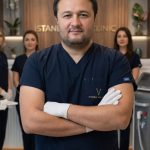
Clinically reviewed by Dr. Harun Eymen Alakaya, MD, hair restoration physician
Key facts
- Method
- Long hair FUE, nothing shaved
- Channels
- Opened with a sapphire blade
- Best suited to
- Hairline, temples and limited areas
- Procedure
- 6 to 9 hours, one day
- Anaesthesia
- Local
- Visible signs
- Redness and small crusts, mostly covered by your hair
- Final result
- 12 to 18 months
- Price
- €4,000, fixed
Quick answers
Unshaven hair transplant: the short version
Is anything shaved at all?
Not in our long hair FUE. Other clinics use “unshaven” for methods that clip a band at the back, so always ask what will be cut.
Will people notice?
Your normal hairstyle covers most of the healing. Redness and small crusts can show if someone looks closely in the first week.
How many grafts can be moved?
Fewer than in a shaved session, because each graft takes longer. The doctor gives you a realistic number from your photos.
Is the result the same as shaved FUE?
Specialists consider the final result comparable, but no controlled trial has compared the two methods directly.
How much does it cost?
A fixed €4,000, whatever the number of grafts or the size of the area.
Who should choose shaved FUE instead?
Men with large areas to cover, or a donor area that is hard to work with. The doctor tells you before you book.
Video summary
Unshaven hair transplant in 60 seconds
What “unshaven” can mean at different clinics, how a graft is moved with its hair still long, and why one unshaven day suits a hairline better than a whole crown. You also see what others are likely to notice while you heal, and what the fixed price covers.
In this video
Read the transcript
An unshaven hair transplant moves hair without shaving your head. Clinics use the word for different methods, and some clip a band at the back. In our long hair FUE, nothing is shaved. Each graft is taken with its hair still long, so you can see the new hairline on the day. Most of these hairs shed later, and new hair grows from month 3. Dr. Alakaya opens every channel with a sapphire blade, in the gaps between your existing hairs. Every graft takes longer, so one day moves fewer grafts. It suits the hairline, temples and limited areas. For larger areas, the doctor tells you before you book. Your styled hair covers most of the healing. Small crusts come away within two weeks, and the final result comes at 12 to 18 months. The price is a fixed €4,000, whatever the number of grafts. Start with a free hair analysis at Graftiva.
Know what you are buying
“Unshaven” means different things at different clinics
Clinics and even published papers use “unshaven” and “no-shave” for quite different methods, and specialists have warned that this confuses patients and weakens informed consent.[1] The useful question is what happens to the hair at the back, where grafts are taken.
| What it is called | What is cut | What it means for you |
|---|---|---|
| Shaved FUE | The whole head, or the back and sides, clipped short | Largest sessions; a shaved look for several weeks |
| Partially shaved | One or more bands at the back, hidden by the hair above | Top keeps its length; the band shows if you wear your hair very short |
| Unshaven with pre-trimming | Individual donor hairs trimmed short, scattered among long hair | Nothing looks shaved; larger sessions are possible than with long hair FUE[6] |
| Long hair FUE (what we do) | Nothing | Grafts keep their length and show the new hairline on the day; slower, so sessions are smaller[2,7] |
These names follow a 2026 review in which hair restoration specialists sorted “unshaven” methods into five defined categories, from fully shaved to long hair FUE.[1] Whichever clinic you choose, ask for the method in these terms, in writing.
How it works
Grafts that keep their length
In long hair FUE each follicular unit is taken out with a fine micro-motor punch while the hair attached to it stays long. The surrounding hair is not cut. The graft is kept in a preservation solution, then placed in a channel the doctor has opened with a sapphire blade.[8]
Because the hair stays long, you and the doctor can see the new hairline as soon as the grafts are in, and the doctor can see the direction and curl of every hair as he places it.[2,3]
It is a preview, not the result. Like any transplanted hair, most of these long hairs shed in the weeks after surgery. The root stays in place and new hair grows from it from about month 3.[11]
The trade-off
Why it takes longer and costs more
Every published account of long hair FUE describes it as slower and more technically demanding than shaved FUE.[2,5] The difference is not one big step but small ones, repeated for every graft.
Time
A longer day
An unshaven procedure usually takes 6 to 9 hours, depending on the number of grafts. In a 2023 study of 152 long hair FUE patients, extraction ran at about 440 grafts an hour.[5] Each doctor treats at most two patients a day, so the schedule allows for it.
Skill
Harder in some scalps
How thick and firm the donor skin is affects how difficult extraction is, more than how curly the hair is.[5] In the same 152-patient study, 2.2% to 4.3% of grafts were cut during extraction, the most in thick, firm scalps.[5] The doctor checks this when he examines you.
Price
A fixed price
The extra time is the reason long hair FUE costs more than our standard packages. The price is fixed, so it does not rise if the doctor adds grafts on the day.
Working through long hair takes patience: every graft has to be found, freed and kept at its full length without disturbing the hair around it. That is why an unshaven session moves fewer grafts than a shaved one, and I plan it with time to spare rather than a higher number.
Dr. Harun Eymen Alakaya, MDHair Restoration Physician, Graftiva ClinicSession size
How many grafts can be moved without shaving?
Fewer than in a shaved session. In published long hair FUE series, sessions averaged roughly 1,200 to 2,000 grafts, mostly for hairlines and moderate hair loss.[3,4] A 2026 series of 236 patients reported unshaven sessions of more than 2,500 grafts in every case, but with pre-trimming, which is a different method.[6]
Your number depends on the area you want covered, the density of your donor area and how your skin behaves. The doctor estimates it from your photos and confirms it when he examines you.
If your goal needs more than one unshaven day can safely deliver, he tells you before you book and explains the options, such as a two-day FUE or a shaved FUE. Overharvesting the donor area to fit a goal into one session is not an option: the donor supply has to last a lifetime.[9]
If someone needs more grafts than an unshaven day can safely give, I say so before they book. Keeping your hair long is never worth thinning the donor area you will rely on later.
Dr. Harun Eymen Alakaya, MDHair Restoration Physician, Graftiva ClinicWhat the evidence says
Honest about the research
- Specialists consider graft survival and the final result comparable to shaved FUE, but this is expert opinion.[2]
- One series of 248 hairline patients, mostly women, reported 93% graft survival at 9 months and high satisfaction.[4]
- In a 2021 series of 134 long hair FUE patients, 112 of them women, the mean share of follicles cut during extraction was 9.2%.[3]
- In a 2023 study of 152 patients, all reported being satisfied with the procedure and 57.4% said they were very happy.[5]
- No controlled trial has compared unshaven and shaved FUE directly. Most data come from single clinics, some from the developers of the devices used.[5,7]
- Graft survival in any FUE depends on handling at every step, from extraction to storage and placement.[10]
Is it for you?
Who it suits, and who should consider a shaved procedure
Usually a good fit
- You need the hairline, temples or a limited area restored
- You cannot take weeks away from work or want privacy
- Your hair at the back is long enough to cover the donor area as it heals
- You want to see the shape of your new hairline on the day
- Your hair loss is stable or medically treated
Often better with shaved FUE
- Large areas to cover, such as the whole top and crown
- A graft need beyond what one unshaven day can deliver
- A donor area with thick, firm skin that makes long hair extraction difficult
- You wear a very short cut anyway, so shaving costs you little
- You want the largest result for the lowest price
The patients who are happiest with an unshaven transplant are those restoring a hairline or a limited area who cannot step away from work. For a whole top and crown, I usually recommend shaving the donor area so the whole plan can be done in one session.
Dr. Harun Eymen Alakaya, MDHair Restoration Physician, Graftiva ClinicWomen who want to keep their length have their own considerations, from the cause of hair loss to the donor area: see our female hair transplant guide. Long hair FUE is also possible with Afro-textured hair, assessed case by case.
Working between your hair
What happens in the thinning area
The hair you still have on top is left long. The doctor opens each channel in the gaps between existing hairs, at the same angle and direction, so the new hair blends with it and the hair you have is not cut.
Placing grafts among existing hair has one known side effect: some nearby hairs, usually ones that were already weak, can shed for a while. In large reviews this was reported in up to about 6.5% of patients around the treated area, and it is more common in women.[12,13] A dense session can also cause a narrow line of temporary shedding within days, which recovers within about three months.[14]
We tell you about this in advance, and plan density so that it protects the hair you already have.
Discretion
What colleagues, family and the camera will see
This is the reason most people choose an unshaven procedure, so here is an honest picture. No study has measured how noticeable unshaven surgery is to others; this is what to expect from the healing itself. Knowing it in advance matters: satisfaction after hair transplantation depends heavily on realistic expectations.[15]
| When | What is on your scalp | What others are likely to see |
|---|---|---|
| Day 1 | Long grafts in place; mild redness and swelling in the treated area and at the back | With your hair combed over, very little. A close look or a parting over the area shows redness |
| Days 2–7 | Mild scabbing and redness in both areas; some people have forehead swelling for a few days[12] | Most of it is covered. Swelling, if it happens, is the most noticeable sign |
| Week 1–2 | Small crusts come away with the gentle washing we show you | Usually nothing with your hair styled |
| Weeks 2–8 | Most long transplanted hairs shed | Your own hair still covers the area; it simply looks as it did before surgery |
| Month 3 onwards | New hair grows from the transplanted roots | Gradual improvement that most people read as “a good haircut” |
Practical tips: a loose cap can be worn on the way home, video calls are easy from day 1, and if you have an important photo or meeting, plan it for after the second week.
Your day
Your unshaven procedure, step by step
Morning
Consultation
A 40 to 60 minute consultation with the doctor, EKG and blood tests, and the final graft plan.
Design
Your hairline
The hairline is drawn and agreed with you. Long hair FUE lets you see it take shape during the day.
Anaesthesia
Local
Needle-free numbing first, then local anaesthesia of the donor and recipient areas.
Extraction
Graft by graft
Grafts are taken with a fine micro-motor punch, keeping their length, and stored in a preservation solution.
Channels
Opened by the doctor
Dr. Alakaya opens the channels with a sapphire blade between your existing hairs.
Next day
Check and wash
A check-up and your first wash at the clinic, with written aftercare instructions.
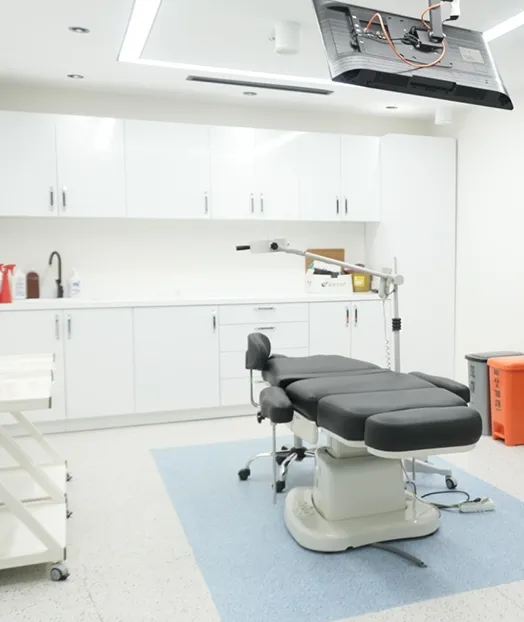

Your team
Who will treat you
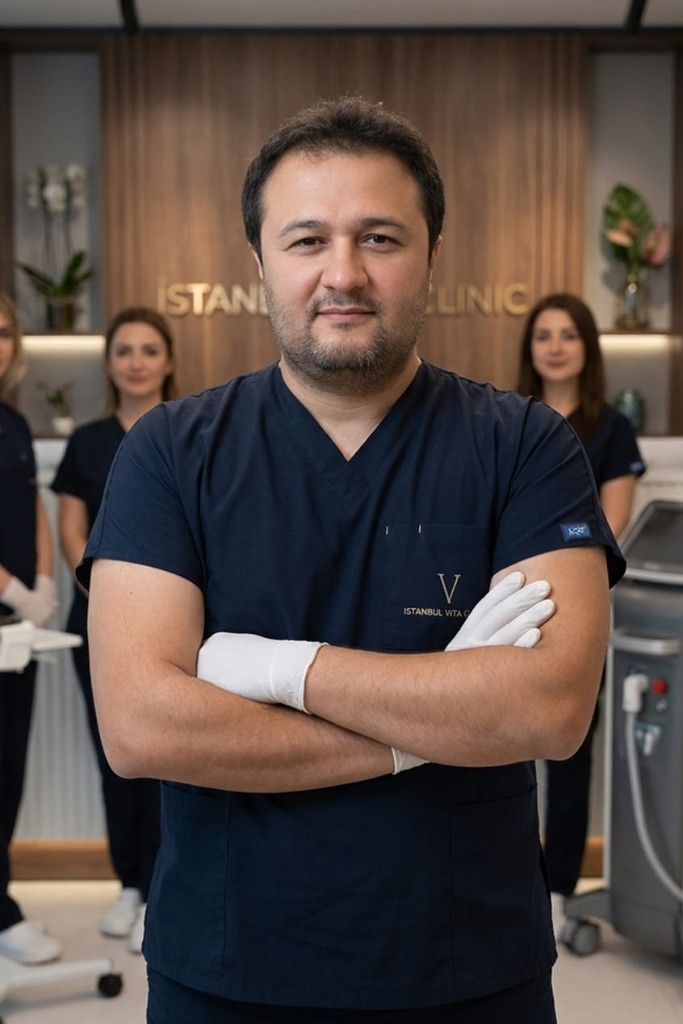
Lead doctor
Dr. Harun Eymen Alakaya, MD
Decides whether long hair FUE suits your goal, plans the session and opens every channel himself.

Hairline design
Tuğçe Yılmaz Arslan
Draws your hairline with you, so you can see it before and after the grafts go in.

Donor assessment and planning
Mustafa Ayhan Balcı
Assesses how many grafts your donor area can safely give without shaving.
Cost
Unshaven hair transplant cost in Turkey (2026)
Long hair FUE at Graftiva has a fixed price of €4,000, regardless of the number of grafts or the size of the treated area.
It costs more than our shaved packages, which start at €2,000 / $2,500, because each graft takes longer to extract and place. If the doctor thinks a shaved procedure would serve your goal better, he tells you, and you choose.
Get these in writing first
- Which method, in the terms above: is anything shaved or trimmed?
- The estimated graft range for your plan
- Who extracts the grafts and who opens the channels
- Everything the price includes, including accommodation and transfers
- What happens if the plan needs more grafts than one day allows
FAQ
Unshaven hair transplant: frequently asked questions
Is an unshaven hair transplant really done without shaving anything?
Ours is. In long hair FUE nothing is shaved or trimmed, and grafts keep their length. Some clinics use “unshaven” for methods that clip a band at the back or trim single hairs, so ask any clinic exactly what will be cut.
Can I go back to work straight after?
Many people return to office work within a few days. Your hair covers most of the healing; redness, small crusts or forehead swelling can show in the first days if someone looks closely.
Why are fewer grafts possible than with shaved FUE?
Each graft takes longer when the hair around it is long: the hair has to be parted, the root found and the neighbouring hairs spared. Over a full day, that limits how many grafts can be moved safely.
Is the result as good as shaved FUE?
Specialists consider the final result comparable when the procedure is done well, and published series report good graft survival. No controlled trial has compared the two directly, so we do not claim one is better.
Will the long hairs I see on day 1 stay?
Most of them shed in the weeks after surgery, as with any transplant. The root stays, and new hair grows from it from about month 3.
Can I have an unshaven transplant on the crown?
Yes, for limited areas. A large crown, especially together with the front, often needs more grafts than one unshaven day can deliver. The doctor tells you from your photos.
Does my hair need to be a certain length?
Your hair at the back needs to be long enough to cover the extraction area while it heals, and the hair on top long enough to cover the recipient area. Send current photos and the doctor will tell you whether to grow it before travelling.
Will my existing hair fall out?
Some weaker hairs near the grafts can shed temporarily; it usually recovers within a few months. We plan density to protect the hair you already have.
Is it more painful than a shaved transplant?
The anaesthesia is the same: needle-free numbing, then local anaesthesia. The procedure takes longer, so the day itself is longer, with breaks for meals and rest.
Why does it cost more?
Because it takes longer and needs more skill per graft. Our price for long hair FUE is fixed at €4,000 and does not change with the number of grafts.
Can I have an unshaven session now and more grafts later?
Yes. Some people restore the hairline unshaven first and plan a further session later, shaved or unshaven, once the first result has matured. The doctor can plan both stages from the start so the donor area is used sensibly.
Can women have an unshaven transplant?
Yes, and most of our female patients do. Women have additional things to check first, such as the cause of hair loss and the donor area: see our female hair transplant guide.
Sources
Research behind this page
Medical statements on this page are based on the peer-reviewed sources below, chosen under our editorial policy. The evidence on unshaven FUE comes mainly from case series and expert reviews; we say so where it matters. Information about how we work comes from our own clinical practice.
- Jimenez F, Gupta AK, Shapiro R, Talukder M. Unshaven follicular unit excision: critical analysis of current nomenclature and proposal for standardized terminology. Dermatol Surg. 2026;52(8):736-742. PubMed
- Trivellini R, Perez-Meza D, Renaud HJ, Gupta AK. Preview long hair follicular unit excision: an up-and-coming technique. J Cosmet Dermatol. 2021;20(11):3422-3426. PubMed
- Park JH, You SH, Kim NR, Ho YH. Long hair follicular unit excision: personal experience. Int J Dermatol. 2021;60(10):1288-1295. PubMed
- Jin M, Zhang J, Jin Z, Pi L, Diao Y. Long-hair follicular unit excision enhances the cosmetic results of hairline restoration: a retrospective study in Chinese recipients. J Cosmet Dermatol. 2024;23(4):1344-1350. PubMed
- Umar S, Khanna R, Gonzalez A, et al. No-shave long hair follicular unit excision using an all-purpose skin-responsive device. Clin Cosmet Investig Dermatol. 2023;16:3681-3691. PubMed
- Muricy MA, Rosa DJF, Schalch FO. Nonshaven follicular unit extraction with pretrimming method and a large-session hair transplantation: experience of a Brazilian surgical team. Aesthet Surg J Open Forum. 2026;8:ojag144. PubMed
- Rodríguez Tamez G, Jiménez F. Long-hair FUE: advantages and disadvantages of the most recent technique in hair transplantation. Actas Dermosifiliogr. 2026;117(10):104707. PubMed
- Jimenez F, Vogel JE, Avram M. CME article part II. Hair transplantation: surgical technique. J Am Acad Dermatol. 2021;85(4):818-829. PubMed
- Carman TP, Rassman W. Follicular unit excision donor area management and considerations of the scalp. Facial Plast Surg. 2024;40(2):195-204. PubMed
- Zhang J, Zhang J, Wu W, et al. Enhancing graft survival rates in follicular unit excision: a Chinese expert consensus on perioperative procedures. Plast Reconstr Surg. 2025;156(6):863-872. PubMed
- Zhou Y, Zhang J, Fan Z, Hu Z, Miao Y. Evaluation of a novel graft-holding solution in hair transplantation: a randomized controlled clinical study. Dermatol Surg. 2023;49(7):675-681. PubMed
- Liu RH, Xu LJ, McCarty JC, et al. A scoping review on complications in modern hair transplantation: more than just splitting hairs. Aesthetic Plast Surg. 2025;49(3):585-595. PubMed
- Okochi H, Onda M, Momosawa A, Okochi M. An analysis of risk factors of recipient site temporary effluvium after follicular unit excision: a single-center retrospective study. Aesthetic Plast Surg. 2024;48(7):1258-1263. PubMed
- Mir-Bonafé JM, Mir-Bonafé JF, Mir-Bonafé M. Immediate-onset linear effluvium associated with high-density hair transplantation: a series of 28 cases. Actas Dermosifiliogr. 2023;114(5):T437-T441. PubMed
- Tan IJ, Jafferany M. Psychological dimensions of hair transplantation: a narrative review of current evidence. J Cosmet Dermatol. 2025;24(10):e70475. PubMed
Keep reading
Related information
For women
Female Hair Transplant
Keeping your length, the cause of hair loss and the donor area.
Read more →
Free hair analysis
Find out how many grafts you need
Answer a few questions about your hair, no photos needed. A doctor reviews your answers and replies with a personal plan.