Large sessions · Istanbul
Two-Day FUE Hair Transplant in Turkey
Two-day FUE (TDF) is a way to carry out a large hair transplant plan on two consecutive days instead of one very long one. Each day, grafts are taken from one side of the donor area and placed the same day, so no graft waits overnight. It does not create more donor hair: it spreads the work of a large plan across two calmer days, in one trip and with one recovery.
Clinically reviewed by Dr. Harun Eymen Alakaya, MD, hair restoration physician
Key facts
- What it is
- One FUE plan carried out over two consecutive days
- Suited to
- Extensive loss across the front, mid-scalp and crown
- Each day
- Grafts taken and placed the same day; none stored overnight
- Technique
- FUE, with sapphire channels or DHI as planned
- Anaesthesia
- Needle-free numbing, then local
- Time in Istanbul
- More than the two surgery days
- Final result
- About 12 months; crown 12 to 18
- Price
- From €3,500
Quick answers
Two-day FUE: the short version
Why two days instead of one?
A large plan means many hours of extraction and placement. Splitting it keeps each day shorter for you and the team and shortens the time each batch of grafts waits outside the body.
Do I get more grafts?
No. The number of grafts depends on what your donor area can safely give, not on the number of days.
Who is it for?
People with extensive hair loss who need the front, mid-scalp and crown treated, and who have a strong enough donor area.
Is it the same as two operations?
No. Two operations are usually 8 to 12 months apart, with two trips and two recoveries. Two-day FUE is one plan, one trip and one recovery.
How long do I stay?
Plan for more than the two surgery days: consultation first, then the two days, then a check-up and first wash before you fly home.
How much does it cost?
Two-day FUE at Graftiva starts from €3,500. Your written quote shows the exact price and what is included before you book.
Video summary
Two-day FUE in 60 seconds
See how a large plan is divided: which side of the donor area is used on each day, which areas are treated first, where you spend the night in between, and why splitting the work does not change how many grafts your donor area can give.
In this video
Read the transcript
When hair loss covers the front, mid-scalp and crown, one plan can be too large for one comfortable day. Two-day FUE splits it across two days in a row. It does not create more hair. Your graft number depends on what the donor area can safely give, with a reserve kept for the future. On day 1, grafts come from one side of the donor area and go to the hairline and front. Every graft taken that day is placed that day. You rest in a hotel near the clinic. On day 2, after a morning check, the other side supplies the mid-scalp and crown. Each batch waits less outside the body, and you and the team get two calmer days. One trip, one recovery. New hair appears around month 4, and the crown can take 12 to 18 months. Two-day FUE starts from €3,500. Start with a free hair analysis at Graftiva.
How it works
One plan, two days
Large sessions, often called megasessions, are usually defined as more than about 3,000 grafts in one procedure. They can treat a large area at once, but they need careful patient selection and an experienced, well-organised team.[1] Two-day FUE is our way of organising such a plan.
Day 1
Front first
Grafts are extracted from one side of the donor area and placed at the hairline and front, the area that shapes your face most. By the evening, roughly half of the plan is done.
The night between
Rest nearby
You spend the night in a hotel close to the clinic. You sleep with your head raised and avoid touching the treated areas; we give you written instructions before you leave on day 1.
Day 2
Mid-scalp and crown
After a morning check, grafts are taken from the other side of the donor area and placed in the mid-scalp and crown. Again, every graft taken that day is placed that day.
When a plan needs this many grafts, I would rather give each half a full, unhurried day than ask the team and the patient to push through one very long one. Each day's grafts are taken and placed that same day.
Dr. Harun Eymen Alakaya, MDHair Restoration Physician, Graftiva ClinicTwo-day FUE is not a different technique. Extraction is FUE on both days, and channels are opened with a sapphire blade or grafts are placed with a DHI pen, as in any of our procedures. Read about FUE and DHI.
Candidates
Who needs a session this large?
Pattern hair loss in men keeps progressing with age, and the stage you are at today is not where you will end up.[2] A large plan makes sense when a large area needs hair now and the donor area can support both today’s session and the future.[3]
Often a good fit
- Extensive loss across the front, mid-scalp and crown
- Hair loss that has slowed down or is under treatment
- A dense, healthy donor area at the back and sides
- You prefer one trip and one recovery over two operations
- Realistic goals: good coverage rather than the density you had at twenty
Usually not the right choice
- A donor area that is too thin for a large harvest
- Young age with fast-progressing hair loss: future loss needs a reserve
- Thinning across the whole scalp, including the back and sides
- Health conditions that make long procedures unwise
- Expectations beyond what the donor area can give
If a smaller, one-day session or a staged plan would serve you better, the doctor says so when he reviews your photos.
Your donor budget
How many grafts can your donor area give?
This is the question that decides everything else, and the honest answer is: there is no universal number.
Every person has a fixed number of follicles with hair that resists pattern loss. In a survey of experienced surgeons, estimates of this lifetime supply for an average 30-year-old ranged widely depending on hair density and how far the loss was expected to progress.[4]
Only part of that supply can be taken without the back looking thin. In a study of 580 men, the safe donor zone and the share that could be extracted varied considerably from person to person.[5] FUE planning therefore spreads extraction evenly and avoids overharvesting.[6]
In a 2013 survey of 34 experienced surgeons, a 30-year-old man with average hair density who was expected to reach Norwood V was estimated to have about 6,404 follicular units of lasting hair over his lifetime, and about 4,963 with below-average density.[4]
In a 2019 study of 580 men with Norwood III or higher, the average density in the scalp donor area was 78.2 follicular units per square centimetre.[5]
How we set your number
- We look at donor density, hair thickness and the size of the safe zone
- We consider your age and how your hair loss is likely to progress
- We keep a reserve for hair you may lose later
- We plan the front first, so the result still looks right if the crown later needs more
The doctor gives an estimated range from your photos and confirms it when he examines you.
Before we talk about a number of grafts, I examine the back and sides of the head. A plan this large always has to leave enough donor hair for the hair you may still lose in the years ahead.
Dr. Harun Eymen Alakaya, MDHair Restoration Physician, Graftiva ClinicWhy we split the work
Time outside the body, and a steady hand
Grafts grow best when they are kept hydrated and cool, handled gently and placed without unnecessary delay.[7] The longer the procedure, the harder those basics are to keep.
Shorter batches
Long grafts-out-of-body times are a recognised challenge of large sessions.[8] Between extraction and placement our grafts are kept in a chilled holding solution, counted and sorted. Laboratory studies suggest cold storage and certain solutions help protect grafts, although the research is not settled on which method is best.[9,10]
In a 2020 laboratory and clinical study, follicles kept for 8 hours in Ringer’s solution at 4°C kept a survival rate comparable to that of standard hair transplant surgery.[8]
Splitting a large plan into two batches does not depend on that debate: each day’s grafts simply wait less, because each day handles roughly half.
Shorter days
Single-day large sessions are performed and published, with sessions reported to last from about 6 up to 12 hours.[11,12] That is a long time for you to lie still and for the team to work with full precision.
In a 2019 series of 273 men, single-day sessions of 3,000 to 6,000 follicular units took between 6 and 12 hours.[11] In a 2023 study of 36 men at Norwood V to VI, an average of 3,705 grafts took 10.6 hours of operating time.[12]
There is no published study comparing two-day and one-day sessions directly. We split large plans because, in our experience, two moderate days are easier on patients and allow the team to work at the same careful pace from the first graft to the last.
Your options
One long day, two days, or two operations?
| One long day | Two-day FUE | Two operations months apart | |
|---|---|---|---|
| Trips to Istanbul | One | One | Two |
| Recoveries | One | One | Two |
| Time in the chair | One very long day | Two moderate days | Two standard days, months apart |
| Longest wait for a graft | Longest | Shorter | Standard |
| See the first result before adding more | No | No | Yes |
| Suits | Moderately large plans | Large plans in one trip | Uncertain progression, or when density will be added later |
Two-day FUE is a good middle way for large plans, but it is not always the best. If seeing the first result before adding density makes more sense for you, a staged plan is the better advice.
Your schedule
Your days in Istanbul
| When | What happens |
|---|---|
| Before you fly | The doctor reviews your photos, explains whether a two-day plan suits you and sends an estimated range of grafts. |
| Consultation | A 40 to 60 minute consultation with the doctor, EKG and blood tests, and final planning of the hairline and the split between the two days. |
| Surgery day 1 | One side of the donor area; hairline and front. Needle-free numbing, then local anaesthesia, with breaks for meals and rest. |
| Night | Hotel near the clinic; sleep with your head raised. |
| Surgery day 2 | Morning check; the other side of the donor area; mid-scalp and crown. |
| Before you fly home | Check-up and first wash at the clinic, with written aftercare instructions and 12 months of online follow-up. |
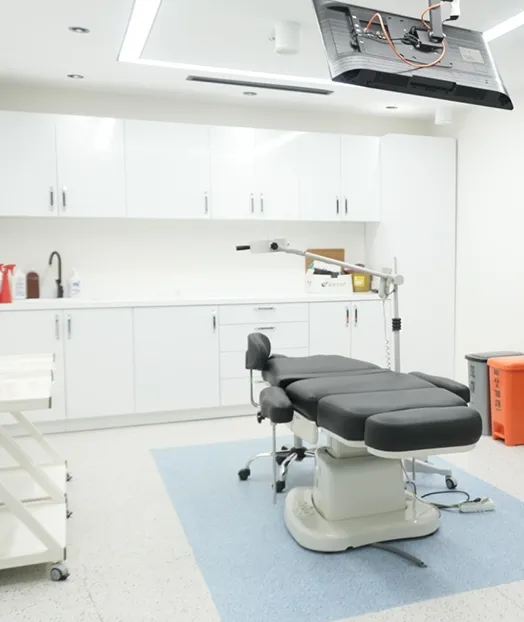

Each doctor treats at most two patients a day. See the clinic.
Safety
Is a large session safe?
Hair transplantation is generally a safe procedure. In a 2025 review of the literature, the most commonly reported problems were pain, swelling and discomfort around the donor area; serious complications were rare.[14]
Across the observational studies in that review, 442 of 2,353 patients reported a complication, most often pain or discomfort.[14]
Large sessions add two things to watch: the total amount of local anaesthetic over the procedure, which is planned according to your body weight and spread over time,[13] and the condition of the donor area after a large harvest. Both are part of why we divide the work over two days and keep a donor reserve.
What we check on day 2
- How you feel after the first day and night
- Swelling and the condition of the treated areas
- How the donor area on the first side looks
- Whether the day-2 plan should stay as it is
If anything suggests a change, the doctor explains it to you before day 2 begins.
On the morning of the second day I look at you before I look at the plan. If your swelling or the first side of the donor area tells me to adjust something, we decide it together before we start.
Dr. Harun Eymen Alakaya, MDHair Restoration Physician, Graftiva ClinicRecovery
Recovery and results after two days
Recovery is broadly similar to a standard FUE: the surface heals over the first weeks, and growth develops over months. With two donor sides and a larger treated area, expect the first days to feel a little more tender.
| When | What to expect |
|---|---|
| First days | Mild swelling and tenderness; sleep with your head raised; first wash at the clinic |
| Weeks 1–3 | Small crusts heal on the top and the donor area |
| Weeks 2–8 | Many transplanted hairs shed. This is expected, and nearby existing hair may shed too; it usually recovers within a few months |
| Around month 4 | First new hairs appear |
| Months 6–9 | Clear change in coverage |
| Month 12 and beyond | Hair matures and thickens; the crown often needs 12 to 18 months |
Cost
Two-day FUE cost in Turkey (2026)
Two-day FUE at Graftiva starts from €3,500. The price is set in your written quote after the doctor has reviewed your photos, and it lists everything that is included before you pay anything.
Be careful with prices quoted per graft for large sessions. A per-graft price rewards a higher number, while the right number is the one your donor area can safely give.
Questions to ask any clinic about a large session
- How many grafts can my donor area give, and how much will be left?
- Will the same doctor plan and supervise both days?
- Are any grafts stored overnight?
- What happens if fewer grafts can be taken than planned?
- Why this plan rather than two operations months apart?
FAQ
Two-day FUE: frequently asked questions
What does TDF stand for?
TDF stands for two-day FUE: one FUE hair transplant plan carried out over two consecutive days. It is a way of organising a large session, not a different technique.
How many grafts can be done with two-day FUE?
There is no fixed number. It depends on what your donor area can give while keeping a reserve and a natural look at the back. Two-day FUE is usually chosen for plans larger than a standard one-day session, but the second day does not add donor hair.
Are grafts stored overnight?
No. Each day’s grafts are extracted and placed on the same day. Day 2 starts with a new batch from the other side of the donor area.
Is two-day FUE better than one long day?
It is not proven to give better growth; no study has compared the two directly. It keeps each day shorter for you and the team and shortens how long each batch of grafts waits, which is why we prefer it for large plans.
Is it better than two separate operations?
It depends. Two-day FUE means one trip and one recovery. Two operations months apart let the doctor see the first result before adding more, which can be wiser if your hair loss is still changing.
Does day 2 hurt more?
The local anaesthetic is given again on day 2, starting with needle-free numbing. The areas treated on day 1 may feel tender, and we plan positioning to avoid pressure on them.
How do I sleep between the two days?
With your head raised, on your back, without pressure on the front of the scalp. We give you written instructions and a check on the morning of day 2.
Who is not a candidate?
People whose donor area is too thin, young patients whose hair loss is progressing quickly, people with thinning across the whole scalp, and anyone for whom a long procedure would not be medically wise.
When will I see results?
First new hairs usually appear around month 4, with a clear change at months 6 to 9. The front usually matures by about month 12; the crown often needs 12 to 18 months.
Will I need another session later?
Possibly, if your hair loss progresses or you want more density in the crown. This is why we keep part of the donor area in reserve.
How much does two-day FUE cost?
It starts from €3,500. Your written quote after the photo review shows the exact price and what is included.
Sources
Research behind this page
Medical statements on this page are based on the peer-reviewed sources below, chosen under our editorial policy. How we organise two-day procedures comes from our own clinical practice; no published study has compared two-day and one-day sessions directly.
- Gabel S. Megasessions: surgical indications and technical perspectives. Facial Plast Surg Clin North Am. 2013;21(3):419-430. PubMed
- Norwood OT. Male pattern baldness: classification and incidence. South Med J. 1975;68(11):1359-1365. PubMed
- Jimenez F, Alam M, Vogel JE, Avram M. Hair transplantation: basic overview. J Am Acad Dermatol. 2021;85(4):803-814. PubMed
- Unger WP, Unger RH, Wesley CK. Estimating the number of lifetime follicular units: a survey and comments of experienced hair transplant surgeons. Dermatol Surg. 2013;39(5):755-760. PubMed
- Chouhan K, Kota RS, Kumar A, Gupta J. Assessment of safe donor zone of scalp and beard for follicular unit extraction in Indian men: a study of 580 cases. J Cutan Aesthet Surg. 2019;12(1):31-35. PubMed
- Lam SM. Follicular unit excision (FUE) basics. Facial Plast Surg. 2024;40(2):158-167. PubMed
- Parsley WM, Perez-Meza D. Review of factors affecting the growth and survival of follicular grafts. J Cutan Aesthet Surg. 2010;3(2):69-75. PubMed
- Gan YY, Du LJ, Hong WJ, Hu ZQ, Miao Y. Theoretical basis and clinical practice for FUE megasession hair transplantation in the treatment of large area androgenic alopecia. J Cosmet Dermatol. 2021;20(1):210-217. PubMed
- Castro AR, Portinha C, Logarinho E. Impact of preservation solutions on the trichogenicity of hair micrografts ascertained by dermal papilla gene expression. Dermatol Surg. 2019;45(12):1649-1659. PubMed
- Huang J, Zhou Y, Li H, et al. Preservation solution protects isolated hair micrografts by inhibiting apoptosis of hair bulb. Life Sci. 2025;361:123292. PubMed
- Li KT, Qu Q, Fan ZX, et al. Clinical experience on follicular unit extraction megasession for severe androgenetic alopecia. J Cosmet Dermatol. 2020;19(6):1481-1486. PubMed
- Di M, Liu Q, Liu C, et al. Follicular unit extraction megasession treatment of high-grade androgenetic alopecia in Asians: introducing novel principles for surgical design. J Cosmet Dermatol. 2023;22(12):3395-3404. PubMed
- Jimenez F, Vogel JE, Avram M. CME article Part II. Hair transplantation: surgical technique. J Am Acad Dermatol. 2021;85(4):818-829. PubMed
- Khatib M, Skorochod R, Wolf Y. Complications following hair transplantation: a systematic literature review and meta-analysis. Aesthetic Plast Surg. 2025;49(23):6393-6405. PubMed
Keep reading
Related information
Technique
FUE and Sapphire FUE
How grafts are extracted and how sapphire channels are opened.
Read more →
Technique
DHI Hair Transplant
Placing grafts with an implanter pen, and where it fits in a plan.
Read more →
Clinical care
Medical Standards
Who does what during surgery, safety checks and follow-up.
Read more →
Free hair analysis
Find out how many grafts you need
Answer a few questions about your hair, no photos needed. A doctor reviews your answers and replies with a personal plan.