Technique · Istanbul
FUE & Sapphire FUE Hair Transplant in Turkey
FUE (follicular unit excision) moves hair from the back of the scalp to thinning areas one follicular unit at a time, without a linear scar. In Sapphire FUE the openings that receive the grafts are made with a fine sapphire blade. At Graftiva Clinic in Istanbul the doctor opens every one of those channels himself, and Sapphire FUE costs nothing extra.
Clinically reviewed by Dr. Harun Eymen Alakaya, MD, hair restoration physician
Key facts
- Extraction
- FUE, 0.6 to 0.8 mm micro-punch
- Channels
- Sapphire blade, opened by the doctor
- Best suited to
- Larger areas, the crown and dense packing
- Anaesthesia
- Needle-free numbing, then local
- Shaving
- Usually needed; unshaven options exist
- Back to desk work
- Within a few days
- Final result
- 12 to 18 months
- Price
- From $2,500 / €2,000; no sapphire surcharge
Quick answers
FUE and Sapphire FUE: the short version
What is the difference between FUE and Sapphire FUE?
Grafts are taken the same way. The difference is the blade used to open the channels that receive them: a sapphire blade instead of a steel one.
Is Sapphire FUE better?
It gives finer openings, but the evidence comparing blades is small and mixed. The size, angle and density of the openings, and who makes them, matter more.
Who opens the channels?
At Graftiva, the doctor opens every recipient channel himself. This is the step that sets the direction and density of your new hair.
How many grafts will I need?
Typically around 2,000 for the temples and hairline, rising to around 5,000 for extensive loss. Your donor area sets the real limit.
Does FUE leave scars?
It leaves many tiny round marks at the back instead of one line. Once healed they are usually hidden by short hair.
How much does it cost?
Packages start at $2,500 / €2,000, as our hair transplant cost guide explains. Sapphire FUE has no surcharge, and the price does not depend on the graft count.
Video summary
FUE and Sapphire FUE in 60 seconds
See how a micro-punch frees each follicular unit from the back of the scalp, what the sapphire blade changes when the receiving channels are opened, and why your donor area, not a target number, sets the graft count. It closes with the recovery timeline and package prices from this page.
In this video
Read the transcript
FUE moves hair from the back of the scalp to thinning areas, one follicular unit at a time. Each graft is freed with a fine round punch, 0.6 to 0.8 mm wide, taken evenly so no patch looks thin. In Sapphire FUE, the receiving channels are opened with a sapphire blade. Their angle and density matter more than the blade itself. At Graftiva, Dr. Alakaya opens every channel himself, and treats at most two patients a day. Plans range from around 2,000 to around 5,000 grafts. Your donor area sets the real limit. Desk work is often possible within days. New hair starts at months 3 to 4; the final result comes at 12 to 18 months. Packages start at $2,500, sapphire included. Start with a free hair analysis at Graftiva.
Terminology
FUE, Sapphire FUE and DHI describe different steps
Clinics often present these as three competing techniques. They are not. Every modern hair transplant has three steps, and the names describe how each step is done.[1,4]
| Term | What it describes | What it does not tell you |
|---|---|---|
| FUE | Taking grafts one follicular unit at a time with a small round punch, instead of removing a strip of skin (FUT).[2,3] | How the grafts will be placed, or who places them |
| Sapphire FUE | FUE extraction, with the recipient channels opened by a sapphire-tipped blade | Whether the openings are the right size, angle and density |
| DHI | FUE extraction, with grafts placed by an implanter pen that opens and fills each site in one move | Whether DHI suits the area being treated |
Both FUE and strip surgery (FUT) are considered current standard methods; FUE avoids a linear scar and a longer donor recovery.[2] Read about the pen technique in our DHI guide.
The blade
What a sapphire blade changes, and what the evidence says
What it changes
- A sharper, V-shaped tip that makes a fine, clean opening
- Openings that can be matched closely to the size of each graft
- Grafts that can sit closer together where density is needed
A mathematical model of blade shapes found that an angled sapphire blade created the smallest wound surface of the blades it tested, and that a lower insertion angle reduced injury for every blade.[7]
What it does not decide
- How well the grafts were taken and handled
- The angle and direction of each new hair
- How many grafts your donor area can give
In a 12-patient study comparing the two sides of the same scalps, hand-made razor slits caused less damage to blood flow than sapphire blades.[8] The evidence is small and points both ways, so we do not claim that the blade alone gives better growth.
We use sapphire blades because they let the doctor make fine, precise openings. It is a tool choice, so it is included in every package at no extra cost.
A sapphire blade lets me make fine, clean channels, but it is a tool, not a result. The angle, the density and how gently each graft is handled matter far more than the blade itself.
Dr. Harun Eymen Alakaya, MDHair Restoration Physician, Graftiva ClinicResponsibility
Who does each step of your FUE
Many clinics describe themselves as doctor-led without saying what the doctor actually does. The step that decides how natural your result looks is the opening of the recipient channels: it sets the angle, direction and density of every new hair.
At Graftiva, the doctor examines you, confirms the plan and opens every channel himself. Each doctor treats at most two patients a day, so this step is never handed over. Our full standard is on the medical standards page.
I open every recipient channel myself, because the angle and direction I choose there is what people will see for the rest of your life. Trained specialists take the grafts out to my plan; that decision stays with me.
Dr. Harun Eymen Alakaya, MDHair Restoration Physician, Graftiva Clinic| Step | Who does it |
|---|---|
| Examination, graft count and technique | Dr. Harun Eymen Alakaya |
| Hairline design | Hairline design specialist, on the doctor’s plan |
| Graft extraction | Graft extraction specialists, as the doctor planned |
| Recipient channels | Dr. Harun Eymen Alakaya, personally |
| Placing the grafts | Implantation technicians |
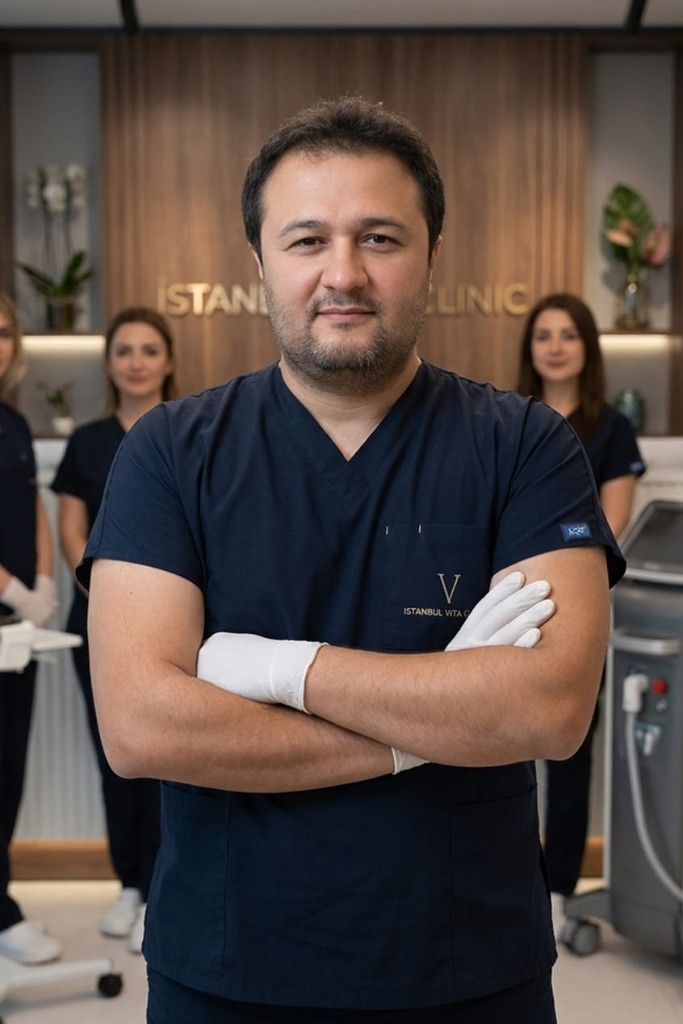
Lead doctor
Dr. Harun Eymen Alakaya, MD
Plans every case and opens every recipient channel. More than 12,000 procedures since 2011.
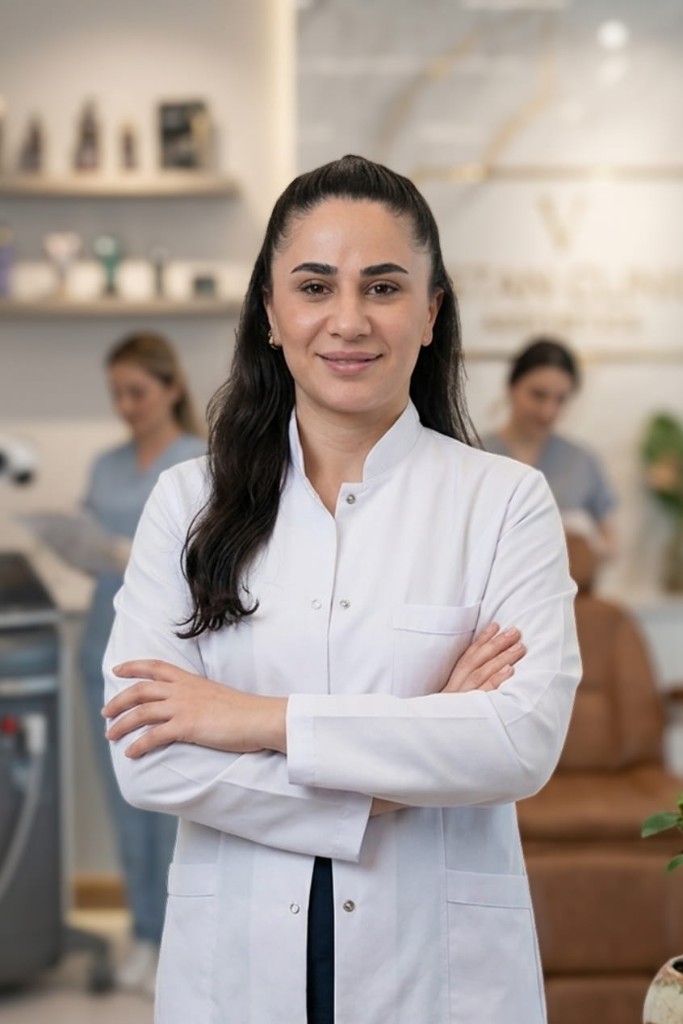
Hairline design
Tuğçe Yılmaz Arslan
Draws your hairline with you on the morning of surgery, following the plan agreed with the doctor.
The donor area
Your donor area is a limited budget
Hair taken from the back does not grow back. FUE makes it easy to take many grafts, which also makes it easy to take too many. Good FUE starts from what the donor area can give, not from a target number.[3,4]
Punch size
A 0.6 to 0.8 mm micro-punch
Each graft is freed with a fine round punch. Punches differ in size, shape and edge, and no single design suits every scalp, so the punch is chosen for your hair and skin.[5] A 2020 review reports that, with current devices and technique, the share of grafts cut during FUE extraction can be kept under 4%.[3]
Spread
Taken evenly, not in patches
Grafts are taken across the whole donor band so no area looks thin. Hair at the sides grows at a flatter angle and is harder to take intact than at the centre, so it is worked more carefully.[6] In a 2020 study of 10 FUE patients, 16.3% to 17.7% of follicles were cut at the sides, more than in the middle of the back of the head.[6]
Reserve
Kept for later
Hair loss can continue for years. We leave enough donor hair for a possible future session rather than using everything at once.
Large cases
Split rather than overharvested
If you need more grafts than one day allows, the work can be spread over two days. See two-day FUE.
When I plan FUE, I start at the back of the head, not the front. The question is not how many grafts you would like, but how many your donor area can give and still look full ten years from now.
Dr. Harun Eymen Alakaya, MDHair Restoration Physician, Graftiva ClinicPlanning
How many grafts will you need?
The stage of hair loss gives a starting point. The final number depends on the size of the area, how dense your donor area is, how thick your hair is, and the result you want.
What raises the number
- A larger area, especially including the crown
- Fine hair, which covers less per graft
- A strong contrast between dark hair and light skin
- A wish for higher density at the front
What limits it
- How many grafts your donor area can safely give
- Hair loss you are likely to have in future
- The need to keep a reserve for later
The crown
The crown is a large, swirling area that can keep thinning for years and uses many grafts for visible change. We usually give the front priority and plan the crown around what is left, alongside medical treatment that protects the hair you still have.[13]
We price by package, not per graft, so the plan is decided on medical grounds rather than on a number that changes the bill.
Graft care
What happens to a graft outside the body
Even experienced surgeons agree that graft survival is often lower than clinics advertise. Damage from handling, drying and lack of oxygen are among the main reasons.[9]
The solution grafts are kept in also matters. In a randomised study of 240 patients, an enriched holding solution reduced shedding after surgery compared with a standard solution, although final survival was similar.[10] At Graftiva grafts are kept chilled in a holding solution (IceGraft) from extraction to placement.
Candidacy
Is FUE right for you?
Pattern hair loss, the main reason for FUE, affects up to 80% of Caucasian men and 42% of women, and becomes more common with age.[13] Not every kind of hair loss can be helped by moving hair.[1] These are the questions the doctor answers from your photos and examination.
Usually a good candidate
- Male pattern hair loss at the hairline, temples, mid-scalp or crown
- Hair loss that has slowed or is being treated
- Dense, healthy hair at the back and sides
- Most patients are between about 25 and 50, once the pattern is clear
- Realistic goals about density and future loss
Wait, or another option first
- Young patients whose loss is still fast and unpredictable
- Thinning that includes the donor area
- Patchy or scarring hair loss that is still active
- Sudden shedding after illness or stress, which often recovers
- Women: please see our female hair transplant guide
Shaving
Shaving, scars and short haircuts
Sapphire FUE usually means shaving the donor area and the area being treated, so the doctor has a clear view of every hair’s angle. If you need to keep your length, an unshaven procedure can be discussed.
FUE leaves no line. It leaves many tiny round marks spread across the back, which fade from pink to skin colour over the following months and are usually hidden by hair a few millimetres long.
If you wear your hair very short
- Tell us how short you cut it, so the extraction is planned around it
- A very close skin fade may show the donor marks, especially in the first months
- Taking too many grafts from one area is what makes the back look thin, not FUE itself
Your visit
Your day of surgery and the months after
| When | What happens |
|---|---|
| Before you fly | The doctor reviews your photos and sends a plan with an estimated graft range. |
| Surgery morning | A 40 to 60 minute consultation with the doctor, EKG and blood tests, the hairline drawn and agreed with you, then shaving. |
| The procedure | Needle-free numbing and local anaesthesia, extraction, channel opening by the doctor and placement, with breaks for meals and rest. |
| Next day | Check-up and first wash at the clinic, with written aftercare instructions. |
| Days 3–5 | Swelling of the forehead, if any, usually settles. |
| Days 10–14 | The small crusts are usually gone. Desk work is often possible after a few days; physical jobs need longer. |
| Weeks 2–8 | Most transplanted hairs shed. The roots stay and regrow. |
| Months 3–4 | New hair starts, fine and patchy at first. |
| Months 6–9 | Density improves noticeably as the new hair thickens. |
| Months 12–18 | The final result. |
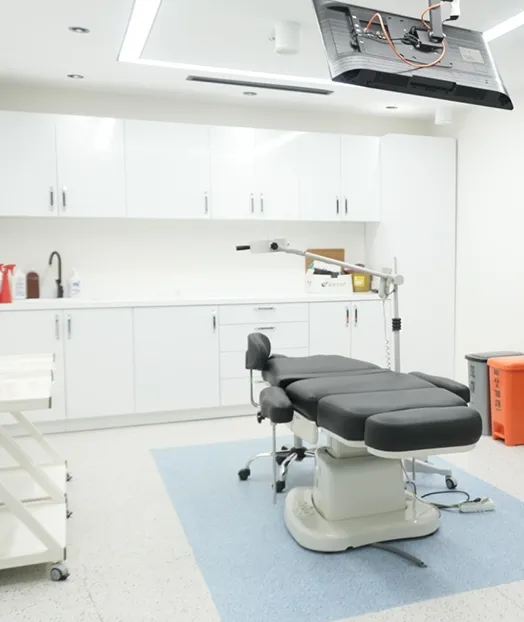

Everything takes place in one licensed clinic. See the clinic.
Risks
Risks of FUE, and how often they happen
Hair transplantation is a low-risk procedure, and serious complications are rare. In large series, overall complication rates were reported at around 1 to 5%.[12] In one 10-year series of 2,896 patients, none had a major or life-threatening complication.[11]
| Risk | What it means | What helps |
|---|---|---|
| Swelling | Puffiness of the forehead in the first days | Sleeping with the head raised; it usually settles in 3 to 5 days |
| Folliculitis | Small spots where hairs grow through; the most common minor issue in a 10-year series of 2,896 patients, seen in 203 of them[11] | Gentle washing; treatment if needed |
| Numbness | Reduced feeling in the donor or recipient area; reported as persistent in up to 11% of patients in a 2025 review[12] | Usually returns over weeks to months |
| Shock loss | Temporary shedding of existing hair near the treated area, reported in up to about 6.5% of patients[12] | Usually regrows within months |
| Donor overharvesting | A thin-looking back from taking too many grafts | Planning: an even spread and a reserve |
| Lower growth than expected | Fewer grafts grow than planned | Careful handling, short time out of the body, aftercare[9] |
Cost
FUE and Sapphire FUE cost in Turkey (2026)
We price by all-inclusive package, not per graft. Sapphire FUE has no surcharge, and the price does not change if the doctor adjusts the graft count during your consultation.
| Package | USA & Canada | Europe | Main differences |
|---|---|---|---|
| Standard | $2,500 | €2,000 | Treatment, health checks, aftercare and 12-month follow-up |
| Premium | $3,200 | €2,800 | Adds hotel stay and VIP airport, hotel and clinic transfers |
| Deluxe | $4,000 | €3,500 | Adds sedation when medically suitable, stem cell therapy and a 5-star hotel |
Every package includes the consultation, EKG and blood tests, PRP and mesotherapy, oxygen therapy, the aftercare package, a Graft Guarantee Certificate, 12 months of online follow-up and an in-clinic translator. Your written quotation lists exactly what is included.
Real results
Sapphire FUE before and after: results from our Istanbul clinic
Four Sapphire FUE cases treated by our team, from a receding hairline to Norwood V. Each shows the grafts, the hair loss stage and the month the after photo was taken.
GFV-0005
2,500 Grafts Sapphire FUE
GFV-0008
3,500 Grafts Sapphire FUE
GFV-0015
4,500 Grafts Sapphire FUE
GFV-0002Afro-textured
3,500 Grafts Sapphire FUE
Individual results vary. Faces are blurred for privacy; the hair is not retouched.
FAQ
FUE and Sapphire FUE: frequently asked questions
Is FUE the same as FUE hair transplant with sapphire?
The extraction is the same. Sapphire FUE refers to the blade used to open the recipient channels after extraction. At Graftiva these channels are opened with a sapphire blade by the doctor.
Does Sapphire FUE give better results than classic FUE?
A sapphire blade makes fine, clean openings, but studies comparing blades are small and their results differ. The planning, the size and angle of the openings and careful graft handling matter more than the blade material.
What does FUE stand for?
Follicular unit excision. Each graft is a natural group of one to four hairs, removed with a small round punch. The term “extraction” is also widely used.
How many grafts can be done in one day?
It depends on your donor area and the area to be treated. Larger plans can be split over two days so the donor area is not overharvested.
Is FUE painful?
The procedure is done under local anaesthesia after needle-free numbing, so most patients feel pressure rather than pain. Mild soreness in the first days is common.
Will I need to shave my head?
Usually the donor area and the area being treated are shaved. If keeping your length matters, an unshaven procedure can be discussed.
Is FUE permanent?
Hair taken from the back of the scalp tends to keep growing after it is moved. The hair around it can still thin over time, which is why medical treatment is often recommended alongside.
Do I need to take finasteride or minoxidil after FUE?
Not always, but medical treatment helps protect the hair that was not transplanted. The doctor explains whether it suits you.
Does FUE leave scars?
It leaves tiny round marks spread over the back of the scalp rather than a line. They are usually hidden by short hair once healed.
Can FUE treat the crown?
Yes, but the crown needs many grafts for visible change and can keep thinning. We usually give the front priority and plan the crown around the remaining donor supply.
When can I go back to work?
Desk work is often possible after a few days. Jobs with heavy exertion, sweating or sun exposure need longer.
Is there an extra charge for Sapphire FUE?
No. Sapphire FUE is included in every package, and the price does not depend on the number of grafts.
Sources
Research behind this page
Medical statements on this page are based on the peer-reviewed sources below, chosen under our editorial policy. Information about how we work comes from our own clinical practice.
- Jimenez F, Alam M, Vogel JE, Avram M. Hair transplantation: basic overview. J Am Acad Dermatol. 2021;85(4):803-814. PubMed
- Queen D, Avram MR. Hair transplantation: state of the art. Dermatol Surg. 2025;51(9):874-881. PubMed
- Epstein GK, Epstein J, Nikolic J. Follicular unit excision: current practice and future developments. Facial Plast Surg Clin North Am. 2020;28(2):169-176. PubMed
- Gupta AK, Polla Ravi S. Concepts, terminology, and innovations in follicular unit excision hair restoration surgery. Facial Plast Surg. 2024;40(2):146-157. PubMed
- Gupta AK, Love RP, True RH, Harris JA. Follicular unit excision punches and devices. Dermatol Surg. 2020;46(12):1705-1711. PubMed
- Mohmand MH, Ahmad M. Transection rate at different areas of scalp during follicular unit extraction/excision (FUE). J Cosmet Dermatol. 2020;19(7):1705-1708. PubMed
- Ahmad M, Ismail M. Effect of different shapes of recipient site creation micro-blades at varying angles and wound injury. J Cosmet Dermatol. 2021;20(11):3610-3615. PubMed
- Balik O. Determination of scalp vascular topography by laser Doppler flowmetry and comparison of vascular damage by different blades in hair transplantation. J Craniofac Surg. 2023;34(8):e803-e806. PubMed
- Cooley JE. Optimal graft growth. Facial Plast Surg Clin North Am. 2013;21(3):449-455. PubMed
- Zhou Y, Zhang J, Fan Z, Hu Z, Miao Y. Evaluation of a novel graft-holding solution in hair transplantation: a randomized controlled clinical study. Dermatol Surg. 2023;49(7):675-681. PubMed
- Garg AK, Garg S. Complications of hair transplant procedures – causes and management. Indian J Plast Surg. 2021;54(4):477-482. PubMed
- Liu RH, Xu LJ, McCarty JC, et al. A scoping review on complications in modern hair transplantation: more than just splitting hairs. Aesthetic Plast Surg. 2025;49(3):585-595. PubMed
- Kanti V, Messenger A, Dobos G, et al. Evidence-based (S3) guideline for the treatment of androgenetic alopecia in women and in men – short version. J Eur Acad Dermatol Venereol. 2018;32(1):11-22. PubMed
Keep reading
Related information
Technique
DHI Hair Transplant
Placing grafts with an implanter pen, and when it suits better.
Read more →
Clinical care
Medical Standards
Who does what during surgery, safety checks and follow-up.
Read more →
Free hair analysis
Find out how many grafts you need
Answer a few questions about your hair, no photos needed. A doctor reviews your answers and replies with a personal plan.