Patient guide · Travel
Your Hair Transplant Trip to Istanbul
Most of our patients fly in from abroad, often to a city they have never seen, for a procedure they have only discussed over messages. This guide covers the practical side: how long to stay, which airport to choose, papers, money and phones, what you will look like on the flight home, and what happens once you are back.
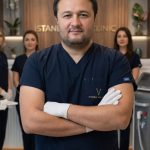
Clinically reviewed by Dr. Harun Eymen Alakaya, MD, hair restoration physician
Trip at a glance
- Typical stay
- 3 days in Istanbul (2 to 3 nights)
- Clinic
- Ataşehir, on the Asian side of the city
- Nearest airport
- Sabiha Gökçen (SAW), about 25–30 minutes
- Other airport
- Istanbul Airport (IST), about 45 minutes or more
- Language
- Interpreter at the clinic; coordinator on WhatsApp
- Passport
- Valid at least 60 days beyond your stay; 6 months advised
- Flying home
- Usually after the first wash and check-up
- After you leave
- 12 months of online follow-up
Quick answers
The six questions people ask before booking a flight
How many days do I need?
Three days in Istanbul covers it for most people: arrive, have the procedure the next day, then the first wash and check-up the day after. A fourth day takes the rush out of it.
Which airport should I fly into?
Sabiha Gökçen (SAW) is on our side of the city and closest. Istanbul Airport (IST) has more routes but means crossing the Bosphorus.
Do I need a visa?
It depends on your passport. Many nationalities can enter without a visa for short stays; others apply online for an e-Visa. Check the official list before booking.
Can I travel alone?
Yes, most patients do. You are met at the airport, driven between hotel and clinic, and an interpreter is with you at the clinic.
When can I fly home?
Usually after the first wash and check-up, the day after surgery. You will have scabs and possibly some swelling, so plan your flight and the days after with that in mind.
What is arranged for me?
Your written quote lists it: the procedure, tests, medication and care kit, interpreter and follow-up, and, depending on your package, hotel and transfers.
How long to stay
Three days, planned around the procedure
Confirm your procedure date first and book flights second. The order matters: the clinic day is fixed, the flight can move.
Day 1
Arrive and rest
Your coordinator has your flight number and you are met at the airport and taken to your hotel. The rest of the day is yours. Eat well, drink water and get a good night’s sleep; tomorrow starts early.
- Arrival and transfer
- Hotel check-in
- Message from your coordinator with the next day’s pick-up time
Day 2
Consultation and procedure
You are collected after breakfast. Blood tests and an ECG come first, then the doctor examines you in person, confirms the plan and draws your hairline with you. The procedure itself usually takes 6 to 8 hours, with a lunch break.
- Tests and in-person consultation
- Hairline agreed with you
- Procedure under local anaesthesia
- Care kit and instructions for the night
Day 3
First wash and check-up
You return to the clinic. The dressing comes off, the team washes your hair and shows you how to do it yourself, and the doctor checks the donor and treated areas. Questions about the coming weeks are answered here.
- First wash, shown step by step
- Doctor’s check of both areas
- Written aftercare plan
Day 3 or 4
Fly home or stay on
Some patients go straight from the clinic to the airport. Others keep a spare day so a delayed flight or a long procedure does not squeeze the wash appointment. If you have the choice, take the spare day.
- Transfer to the airport
- Or one quiet extra night
| If you are… | Plan for | Why |
|---|---|---|
| Having a standard one-day procedure | 3 days (2–3 nights) | Arrival, procedure, first wash and check-up. |
| Landing late at night or after a long-haul flight | 4 days | You start a 6 to 8 hour procedure rested rather than jet-lagged. |
| Having a two-day FUE plan | 4 days or more | Two procedure days, then the wash and check-up. |
| Combining the trip with sightseeing | Extra days before the procedure | Afterwards you will want to avoid sun, crowds and heat for a while. |
When in the year?
There is no medically better month, but the season changes the first two weeks at home. In summer, sun on a fresh scalp and sweating under a hat are hard to avoid; in winter, a loose hat is normal and nobody looks twice. Think too about when you can take time off: in our patients the small scabs are usually visible for 7 to 10 days, and forehead swelling, a common reaction after a hair transplant,[2,3] usually settles within the first week.
Time off work
Count your travel days plus about a week at home if you do not want colleagues to notice. Desk work from home is often possible a few days after you return. Jobs that involve heavy lifting, heat, dust or a helmet need a longer break; your doctor will tell you how long. More in After your transplant.
Getting here
Which airport, and how you get to the clinic
Istanbul is one city on two continents. Our clinic is in Ataşehir, on the Asian side, close to our partner hotels. Of the two international airports, Sabiha Gökçen (SAW) is on the same side and closest. Istanbul Airport (IST) is the larger hub with more direct routes, but it is on the European side, so the transfer crosses one of the Bosphorus bridges.
Both work. If you have a choice of similar flights, pick SAW; if IST gives you a direct flight instead of a connection, the direct flight usually wins. Send us the options before you buy and we will tell you which one is easier for your dates.
| Sabiha Gökçen (SAW) | Istanbul Airport (IST) | |
|---|---|---|
| Side of the city | Asian, same as the clinic | European |
| To the clinic area | About 25–30 minutes | About 45 minutes, longer at rush hour |
| Routes | Many European and regional flights | Most long-haul and direct flights |
| Good choice if | A similar flight exists to both | It saves you a connection |
Before you fly
Send us your flight details
Share your flight number and arrival time on WhatsApp once you have booked. If the flight is delayed, the driver tracks it; you do not need to rebook anything.
When you land
Being met at arrivals
After passport control and baggage, a driver meets you in the arrivals hall. Keep your phone on and connected so your coordinator can reach you; the details are confirmed before you travel.
Your stay
What is arranged for you, and what you arrange yourself
Packages differ in what they include, so the only list that counts is the one on your written quote. This is how the pieces usually fit together.
Part of every treatment plan
- Blood tests and ECG before surgery
- In-person consultation with the doctor
- The procedure, as agreed in your plan
- Medication and a care kit: shampoo, foam, a disposable underpad and a neck pillow
- First wash and check-up at the clinic
- Interpreter at the clinic
- 12 months of online follow-up
- Written guarantee document
Depends on your package
- Hotel nights near the clinic
- Airport, hotel and clinic transfers
- Extra supporting treatments, such as stem cell therapy
Usually yours to arrange
- Flights
- Visa or e-Visa fee, if your passport needs one
- Travel insurance
- A companion’s travel and meals
- Extra nights and sightseeing
Where you stay
Our partner hotels are close to the clinic in Ataşehir, so the morning drive on procedure day is short: Istanbul Marriott Hotel Asia, Selectum City Ataşehir and Elite World Grand. If your package does not include a hotel, or you prefer to book your own, choose somewhere on the Asian side near Ataşehir and tell us the address so pick-ups can be planned.
Two small things help on the night after surgery: ask for extra pillows so you can sleep with your head raised, and keep the room cool.
Language
You do not need any Turkish. An interpreter is with you at the clinic, and before and after the procedure your patient coordinator is on WhatsApp for practical questions: pick-up times, directions, a pharmacy, a restaurant nearby. The consent form and your aftercare plan are given to you in writing, in a language you understand. If anything in them is unclear, ask before you sign.
Papers
Visa, e-Visa and passport
Entry rules are set by the Turkish government and change from time to time. Treat what follows as a starting point and check the official pages for your passport before you book.
| Your situation | What it usually means | Where to check |
|---|---|---|
| Your country is visa-exempt | Many passports can enter for short stays (often up to 90 days in any 180) without a visa. | Ministry of Foreign Affairs country list |
| Your country is eligible for an e-Visa | Apply online before you travel; it usually takes minutes. The e-Visa covers tourism and business trips. | evisa.gov.tr (official site) |
| Neither applies | Apply for a visa at a Turkish embassy or consulate in good time. Ask us for an appointment letter if the consulate requests one. | Your nearest Turkish consulate |
Passport validity
Turkish law requires your passport to be valid for at least 60 days beyond the length of stay your visa or exemption allows. In practice, that means up to 150 days’ validity on arrival for a 90-day exemption. The Ministry of Foreign Affairs advises at least six months’ validity from your arrival date, which is the simpler rule to follow.
Avoid unofficial visa websites
Search results often show agencies that charge extra to file the same e-Visa application. The official site is evisa.gov.tr. Print or save the e-Visa and keep it with your passport.
Information checked on official sources on 19 November 2026.
Practical
Insurance, money, phone and the small things
| Topic | What to know |
|---|---|
| Travel insurance | Standard travel policies often exclude planned or cosmetic procedures. Read the wording, or look for cover that includes complications of elective treatment abroad. Insurance is about the trip as well: cancelled flights, lost luggage, illness unrelated to the procedure. |
| Paying | Your quote states the currency and how to pay. Tell your bank you are travelling so a large card payment is not blocked. Carry a little Turkish lira for small purchases. |
| Phone and internet | A travel eSIM or your roaming plan keeps WhatsApp working from the moment you land, which is how your driver and coordinator reach you. Hotels and the clinic have Wi-Fi. |
| Time and power | Türkiye is on UTC+3 all year. Sockets are the round two-pin European type (230 V). |
| Medication you take | Bring it in its original packaging with a copy of the prescription, and tell us about it before you travel; some medicines are paused before surgery. See Before your transplant. |
| Emergencies | The general emergency number in Türkiye is 112. For anything to do with your procedure, contact your coordinator or the clinic first. |
Company
Coming alone or with someone
Most patients travel alone, and the trip is organised for that: you are collected, driven, accompanied by an interpreter and given everything in writing. You are awake throughout the procedure and walk out of the clinic yourself.
A companion is still welcome, and some people simply feel better with one. Tell us in advance so transfers and the hotel room can be planned. Their flights, meals and any room upgrade are not part of your package.
Alone works well if
- You are comfortable in a hotel on your own
- You can follow written instructions
- Your flight home is not very long or has few changes
A companion helps if
- You are anxious about the procedure or travel
- You have a long-haul flight with connections
- You want help with luggage and the first evening
- You have a health condition that needs watching
Going home
Flying home after your transplant
Patients usually fly home after the first wash and check-up. The flight itself is not the problem; protecting the grafts in a crowded cabin and on a long journey is.
What you will look like
Be ready for it: the treated area is red and covered in small scabs, and the donor area is short and pink. Swelling of the forehead, and sometimes around the eyes, is a common reaction in the first days after a hair transplant.[2,3] In our patients it usually shows on day 2 or 3 and fades within about a week. It looks worse than it feels. Most people find a loose hood or a soft, wide hat enough on the journey; ask the team on the wash day what you can wear and from when.
Long flights and blood clots
Long-distance travel raises the risk of a blood clot in the legs roughly two to four times; for flights over four hours, about one in 4,600 travellers has a clot with symptoms in the following four weeks.[1] The risk is small, but it adds up with other factors. Walk the aisle when you can, flex your calves, drink water rather than alcohol, and tell the doctor before surgery if you have had a clot, take hormones or have a clotting condition.
On the journey
- Wear a top that opens at the front. Nothing you pull over your head.
- Use the neck pillow from your care kit so you can doze upright without the grafts touching the headrest.
- Mind the overhead bins. Ask for help lifting bags; a knock to the head is easy on a crowded plane.
- Keep medication and the care kit in hand luggage, with the clinic’s written instructions.
- Avoid alcohol on the flight and in the first days after surgery.
- At security, you may be asked to remove a hat. That is fine; just do it gently.
Seeing Istanbul
Fitting in some sightseeing
Istanbul is worth seeing, but the order matters. Do your sightseeing before the procedure; afterwards, your scalp needs shade, calm and clean air.
| Activity | Before surgery | In the days after |
|---|---|---|
| Walking tours, museums, the bazaars | Yes, enjoy it | Gentle walks only; crowded places risk a knock to the head |
| Mosque visits | Yes | Men are asked to remove hats inside; plan around that, or visit before |
| Bosphorus boat trip | Yes | Only with full shade; avoid sun and wind on the scalp |
| Turkish bath (hammam), sauna, steam room | Avoid the day before | No: heat and steam are off limits for a month |
| Swimming | Yes | No: pools and the sea wait until the doctor clears you |
| Big meals and late nights | Keep the night before light and alcohol-free | Rest is the priority |
The full list of activities and when they are safe again is in After your transplant.
Packing
What to pack
Pack light: you will be carrying your bag on the way home with a fresh scalp. The clinic gives you the medication and care kit, so you do not need to buy special products.
Documents
Papers and money
- Passport, valid long enough (see above)
- e-Visa printout, if you need one
- Written quote and booking confirmation
- Travel insurance details
- Bank card that works abroad, plus a little cash
Clothes
For procedure day and the flight home
- Two or three tops that zip or button at the front
- Comfortable trousers and slip-on shoes
- A loose hood or a soft, wide-brimmed hat
- Something warm: clinics and planes can be cool
Health
Medication and records
- Your regular medicines in original packaging
- Copies of prescriptions and any recent test results
- A list of allergies and past operations
- Glasses, if you wear contact lenses
Comfort
Small things that help
- Phone charger and a power bank
- Headphones and something to watch: procedure day is long
- A reusable water bottle
- Earplugs and an eye mask for the hotel and flight
Back home
After you fly home
The trip ends; the process does not. Most of what people worry about, such as shedding, redness or a pimple on the scalp, happens weeks after they are back home.
How follow-up works
- You keep the same WhatsApp line with your team for questions at any hour.
- You send photos at agreed points over the first year, and the doctor reviews your progress: 12 months of online follow-up are included.
- You wash at home exactly as you were shown; see Hair washing after a transplant.
- You can see what to expect month by month in the growth timeline.
Take a written summary home
Studies of patients treated abroad describe complications that are noticed or treated after they return home, often by doctors who have no record of what was done.[4,5] Keep the clinic’s written summary of your procedure and the medication you were given. If you ever need to see a doctor at home about your scalp, show it to them, and let us know too.
If you notice spreading redness, increasing pain, pus, fever or swelling that is getting worse rather than better, contact us the same day.
Help while you are in Türkiye
Who to call
| For | Contact |
|---|---|
| Pick-ups, directions, anything about your stay or procedure | Your patient coordinator: WhatsApp +90 543 459 50 95 |
| A medical or other emergency | Emergency number 112 |
| Independent help for international patients in Türkiye | HealthTürkiye call centre (Ministry of Health): +90 850 288 38 38, 24/7 |
FAQ
Travel questions, answered
How many days do I need in Istanbul for a hair transplant?
Three days for most people: arrival, the procedure, then the first wash and check-up. A fourth day helps if you arrive late at night, have a long-haul flight or a two-day procedure.
Which Istanbul airport is closest to the clinic?
Sabiha Gökçen (SAW), on the Asian side, about 25 to 30 minutes by car. Istanbul Airport (IST) is on the European side, about 45 minutes or longer depending on traffic.
Do I need a visa to have a hair transplant in Türkiye?
It depends on your passport. Many nationalities are visa-exempt for short stays, others can apply online at evisa.gov.tr, and some need a visa from a Turkish consulate. Check the Ministry of Foreign Affairs list before booking.
Can I fly home the day after my hair transplant?
Usually yes, after the first wash and check-up at the clinic. Wear a top that opens at the front, use the neck pillow, avoid knocks to the head and walk the aisle on long flights.
Is it safe to travel alone?
Yes. Most patients come alone. You are met at the airport, driven between the hotel and clinic, and an interpreter is with you at the clinic. You can still bring a companion if you prefer.
Will people notice on the flight home?
Probably, if they look closely: the treated area has small scabs and is red, and the forehead can be swollen for a few days. A loose hood or soft hat covers most of it.
Can I visit a Turkish bath after my hair transplant?
Not straight away. Heat and steam are off limits for a month after surgery. If a hammam is on your list, go before the procedure.
What happens if my flight is delayed?
Nothing you need to fix. Send your flight number when you book; the driver follows it. If a delay affects your appointment, your coordinator moves the schedule.
Sources
Research and official sources behind this page
Medical statements are based on the peer-reviewed sources below, chosen under our editorial policy. Entry rules come from official Turkish government sources, checked on 19 November 2026. Travel arrangements describe how our own clinic works.
- Kuipers S, Schreijer AJ, Cannegieter SC, et al. Travel and venous thrombosis: a systematic review. J Intern Med. 2007;262(6):615-634. PubMed
- Gholamali A, Sepideh P, Susan E. Hair transplantation: preventing post-operative oedema. J Cutan Aesthet Surg. 2010;3(2):87-89. PubMed
- Liu RH, Xu LJ, McCarty JC, et al. A scoping review on complications in modern hair transplantation: more than just splitting hairs. Aesthetic Plast Surg. 2025;49(3):585-595. PubMed
- Klein HJ, Simic D, Fuchs N, et al. Complications after cosmetic surgery tourism. Aesthet Surg J. 2017;37(4):474-482. PubMed
- Maltezou HC, Pavli A. Challenges with medical tourism. Curr Opin Crit Care. 2024;30(3):224-230. PubMed
Official sources
- Republic of Türkiye Ministry of Foreign Affairs: Visa information for foreigners (country list and passport validity rule) Official site
- Republic of Türkiye official e-Visa application system Official site
- HealthTürkiye (Ministry of Health): Support Services, international patients call centre Official site
Patient guide
Next steps in your journey
Before
Before Your Transplant
Medication, alcohol, smoking and what to do in the weeks before you fly.
Read more →
After
After Your Transplant
Sleep, swelling, work, sport and the signs to watch in the first weeks.
Read more →
Free hair analysis
Plan your dates with us
Answer a few questions about your hair, no photos needed. A doctor reviews your answers, and your coordinator helps you choose dates, an airport and the right number of nights, free.