Non-surgical · Istanbul
PRP Hair Treatment in Turkey
PRP (platelet-rich plasma) is a series of scalp injections made from your own blood. Research shows it can add a modest amount of density to thinning hair in men and women, as long as the follicles are still there. It does not regrow bald areas, the results need upkeep, and on its own it ranks below minoxidil. At Graftiva Clinic we tell you which group you are in before you book a session.
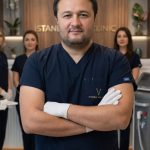
Clinically reviewed by Dr. Harun Eymen Alakaya, MD, hair restoration physician
Key facts
- What it is
- Injections of your own concentrated platelets
- May help
- Early to moderate pattern thinning, men and women
- Will not help
- Bald areas where follicles are gone
- Usual course
- 3 sessions, about a month apart
- Judged at
- Month 3 at the earliest, month 6 to be fair
- Side effects
- Tenderness, redness, mild swelling, short-lived
- Price
- $200 per session; 3 sessions $600
- With a transplant
- Included in every transplant package
Quick answers
PRP for hair loss: the short version
Does PRP work?
Modestly. Reviews of randomised trials show more hairs per square centimetre than placebo, but the quality of the evidence is low and hair thickness often does not change.
Who is it for?
Men and women with early to moderate pattern thinning, whose follicles are weakened but still present. Not for bald areas or scarring hair loss.
Is it better than minoxidil?
No. In a large comparison of trials, PRP alone ranked below minoxidil alone. Combined with minoxidil it ranked higher than either on its own.
How many sessions?
A common start is three sessions about a month apart, then a check at months 3 and 6 before deciding on any maintenance.
Can I do it in one trip?
One session, yes. A full course needs monthly visits, so for most international patients PRP makes most sense alongside a transplant or continued nearer home.
How much does it cost?
$200 per session, $600 for three. PRP is already included in every Graftiva transplant package.
Video summary
PRP hair treatment in 60 seconds
From a small blood sample to the platelet-rich layer injected into thinning areas: how PRP is prepared, why it needs a follicle that is still there, what the research does and does not show, and how a course of sessions is judged. Watch it for the overview, then read the evidence and prices below.
In this video
Read the transcript
PRP is a course of scalp injections made from your own blood. It may add density to thinning hair, if the follicles are still there. A small amount of blood is drawn from your arm, then spun in a centrifuge until it separates into layers. Only the platelet-rich layer is used. The doctor injects it into the thinning areas in small, shallow injections. PRP only works on follicles that still exist. Smooth, bald areas will not respond. Research shows a modest gain in density, from low-quality evidence. Alone, PRP ranks below minoxidil. Together, they rank above either one. A usual start is three sessions, about a month apart, with photos compared at month 3 and month 6. A session is $200, and PRP is included in every Graftiva transplant package. Send your photos to check if it suits you.
The treatment
What PRP is, and what happens in a session
Platelets are blood cells best known for clotting. They also carry growth factors, proteins that signal cells to repair and grow. The idea behind PRP is to deliver those signals, in concentrated form, to weakened hair follicles.
In the treatment room
- A small amount of blood is drawn from your arm, as for a routine blood test.
- The tube is spun in a centrifuge so the blood separates into layers.
- The platelet-rich layer is drawn into a syringe.
- The doctor injects it into the thinning areas of the scalp in a pattern of small, shallow injections.
- You leave with aftercare instructions and can usually go back to your day.
Why preparation matters
Spinning separates blood by weight. Only the thin platelet-rich layer is used, and how concentrated it is depends on the kit, the spin and the volume drawn.
There is no single standard way to prepare PRP. Kits, the number of spins, whether the platelets are “activated” and how much is injected all vary between clinics and studies, and some of these choices seem to affect results.[4,10] It is reasonable to ask any clinic how theirs is prepared.
The evidence
What the research actually shows
PRP is one of the most marketed hair treatments and one of the most studied. Here is what the best summaries of the research found, including where the evidence is thin.
| Question | What the studies found | How sure we can be |
|---|---|---|
| Does it add density in men and women with pattern hair loss? | Yes, modestly. A 2024 review of 14 randomised trials found about 28 more hairs per cm² than placebo; other reviews agree on density.[1,2,3,4] | Low: small, varied studies with signs of publication bias[1] |
| Does it make each hair thicker? | Mixed. A 2025 meta-analysis of 43 randomised trials with 1,877 participants found more density and less hair loss, but no significant change in hair thickness; a review in women found some improvement.[1,2,4,5] | Low |
| Does it work for women? | A 2024 review of 21 trials in 628 women found better density and thickness and fewer hairs on a pull test.[5] | Moderate to low; results varied with dose and duration |
| Is it better than minoxidil? | No. In a network comparison of 27 trials, PRP alone ranked below minoxidil alone; minoxidil plus PRP ranked above both.[7] | Moderate for the ranking |
| Does it add to minoxidil? | Adding PRP to minoxidil gave higher density than minoxidil alone in 5 trials.[6] | Low to very low |
| Does it help a transplant? | Three small controlled studies linked PRP with earlier growth after transplantation. In one randomised study of 40 FUE patients split into two groups, everyone given PRP had over 75% regrowth at 6 months, against 4 patients in the group without it.[8,9] | Low: few patients, different methods |
| Alopecia areata? | Some studies found results similar to steroid injections, but it cannot yet be recommended routinely.[14] | Low |
| How long do results last? | There is no good long-term data. Maintenance is a clinical practice, not an evidence-based schedule. | Unknown |
Our reading: PRP is a reasonable add-on for the right patient, not a first-line treatment on its own and not a substitute for a transplant where hair has gone. Expert panels list it among the options for pattern hair loss, next to medicines and microneedling.[12]
I offer PRP as an add-on, not as a cure. If the follicles in an area have already gone, PRP will not bring them back, and I would rather tell you that before you pay for sessions than after.
Dr. Harun Eymen Alakaya, MDHair Restoration Physician, Graftiva ClinicCandidates
Who PRP may help, and who it will not
PRP can only work on a follicle that still exists. That single fact decides most cases.
May be worth trying
- Early to moderate pattern thinning in men
- Female pattern thinning at the parting or on top
- Thinning that is still active, alongside medical treatment
- Before or after a transplant, to support the native hair around the grafts
Unlikely to help, or needs caution
- Smooth, bald areas where follicles have gone
- Scarring hair loss such as frontal fibrosing alopecia
- Shedding with an untreated cause, such as low iron or a thyroid problem
- Blood or clotting disorders, or blood-thinning medicines
- Active infection on the scalp, or a serious illness under treatment
If photos show that your follicles are gone in the area that bothers you, we will tell you that PRP is unlikely to change it, and explain whether a transplant could.
The options
Where PRP sits among hair loss treatments
Most people asking about PRP have not yet tried the treatments with the strongest evidence. This is how the main options compare.
| Treatment | What it does | Evidence | Typical role |
|---|---|---|---|
| Minoxidil (topical or low-dose oral) | Prolongs the growth phase of hair | Strong | First line for men and women[12] |
| Finasteride or dutasteride (men) | Reduces the hormone that shrinks follicles | Strong | First line for men[12] |
| Antiandrogens (women) | Reduce the effect of male hormones on follicles | Moderate | Selected women, with medical advice |
| PRP | Delivers growth factors to weakened follicles | Low to moderate | Add-on; ranked above minoxidil only when combined with it[7] |
| Microneedling | Tiny controlled injuries that stimulate the scalp | Low to moderate | Add-on to minoxidil[7] |
| Hair transplant | Moves follicles to where hair has gone | Strong for suitable patients | Bald or very thin areas with a good donor area |
Prescription medicines should be started and followed by a doctor who knows your health history. We will explain the options during your assessment.
With a transplant
PRP and your hair transplant
PRP is included in every Graftiva transplant package. It is not there to make the grafts grow on their own: transplanted follicles grow because they are healthy follicles in a new place. Its role is around them.
A transplant fills the area where hair has gone. The native hair around it is often still thinning, and that is where PRP, together with medical treatment, may help. Small studies also suggest earlier growth after surgery when PRP is used, but they are too few to promise a better final result.[8,9]
When PRP is given around your procedure is set by the doctor as part of your plan.
Your grafts grow because they are healthy follicles moved to a new place. I use PRP for the thinning hair around them, alongside medical treatment, because that is the hair that keeps changing after surgery.
Dr. Harun Eymen Alakaya, MDHair Restoration Physician, Graftiva ClinicIn short
- The transplant adds hair where it has gone
- PRP may support the weak hair around the grafts
- Medical treatment protects the hair you still have
Sessions
How many sessions, and how to tell whether it is working
Why a course, not a single session
In a randomised trial, three monthly sessions with a booster at month 6 gave a clearly larger rise in hair count than two sessions three months apart: a 29.6% against a 7.2% rise at 6 months in 40 patients, with 82% satisfied.[11] A wider analysis also found better results with more sessions at shorter intervals.[10] A single session is rarely enough to judge.
Measuring, not guessing
Hair looks different with every wash, cut and light. Judge PRP with photos taken the same way before the first session and at months 3 and 6: same parting, same light, dry hair. If there is no visible change at month 6, more sessions are unlikely to change that, and we will say so.
International patients
Is it worth travelling to Istanbul for PRP?
An honest answer: for PRP alone, usually not, unless you are already coming.
Most common
With a transplant
PRP is already part of your transplant package, so it comes with no extra trip and no extra cost.
- No separate booking needed
- Planned with your procedure
Possible
First session here, then nearer home
We assess your scalp, give the first session and send you home with a written plan your local doctor can follow.
- Assessment and photos at the start
- Continue with a clinic near you
Practical only if
You are in Istanbul regularly
A full course needs visits about a month apart. If you live in or travel to Istanbul often, the full course can be done here.
- Three sessions, about a month apart
- Checks at months 3 and 6
Safety
Side effects and who should not have PRP
Because PRP is made from your own blood, allergic reactions are not expected. Across the trials, side effects were mostly mild and short-lived.[2,3,5]
- Pain or stinging during the injections
- Scalp tenderness, redness or mild swelling
- Small bruises or pinpoint bleeding at injection sites
- Temporary discomfort for a day or two
Tell us first if you have
- A platelet or clotting disorder
- Blood-thinning or antiplatelet medicines
- An infection on the scalp or elsewhere
- Cancer, or treatment that affects your blood or healing
- A serious illness under treatment
- Problems after injections in the past
These need a medical assessment before any session. Expert guidance on PRP in these situations is based largely on clinical caution rather than trials.[13]
Cost
PRP hair treatment cost in Istanbul (2026)
A fixed price per session. Your doctor confirms how many sessions make sense for you.
| Option | Price | Notes |
|---|---|---|
| Single session | $200 | Price per session |
| Course of 3 sessions | $600 | The usual starting course, about a month apart |
| Course of 4 sessions | $800 | At the same per-session price |
| With a hair transplant | Included | PRP and mesotherapy are part of every transplant package |
FAQ
PRP hair treatment: frequently asked questions
Does PRP regrow hair on bald areas?
No. PRP works on follicles that are weakened but still present. Where follicles have gone, the scalp looks smooth and shiny, and only a transplant can add hair there.
Is PRP painful?
The injections sting, and the scalp can feel tender for a day or two. In one trial, patients rated the pain at about 2 out of 10 on average.
How soon will I see results?
Not after the first session. Early change can sometimes be judged around month 3, and month 6 gives a fairer picture.
Are the results permanent?
No. PRP does not stop the underlying cause of pattern hair loss, and there is no good long-term data on how long its effect lasts. Many people who respond choose occasional maintenance sessions.
Can I use minoxidil or finasteride with PRP?
Yes, and the combination ranks better in the research than PRP alone. Do not stop a medicine that is working in order to try PRP.
Does PRP help women with thinning hair?
A review of 21 trials in women found better density and thickness. It works best alongside medical treatment and when the cause of the thinning is known.
Does PRP help after a hair transplant?
Small studies suggest earlier growth after surgery, but not enough to promise a better final result. Its clearer role is supporting the native hair around the grafts.
Is PRP the same as mesotherapy?
No. PRP is made from your own blood; mesotherapy uses a prepared mixture of substances injected into the scalp. Both are included in our transplant packages.
Can PRP treat alopecia areata?
It has been tried, with some results similar to steroid injections, but the evidence is not strong enough to recommend it routinely.
What should I avoid before a session?
Tell us about every medicine and supplement you take, especially anything that thins the blood. The doctor will tell you whether anything should change before your session.
Can I wash my hair and exercise afterwards?
You receive aftercare instructions after each session, including when to wash your hair and return to exercise.
Sources
Research behind this page
Medical statements on this page are based on the peer-reviewed sources below, chosen under our editorial policy. Information about how we work comes from our own clinical practice.
- Kieling L, Konzen AT, Zanella RK, Valente DS. Is autologous platelet-rich plasma capable of increasing hair density in patients with androgenic alopecia? A systematic review and meta-analysis of randomized clinical trials. An Bras Dermatol. 2024;99(6):847-862. PubMed
- Zhang X, Ji Y, Zhou M, et al. Platelet-rich plasma for androgenetic alopecia: a systematic review and meta-analysis of randomized controlled trials. J Cutan Med Surg. 2023;27(5):504-508. PubMed
- Evans AG, Mwangi JM, Pope RW, et al. Platelet-rich plasma as a therapy for androgenic alopecia: a systematic review and meta-analysis. J Dermatolog Treat. 2022;33(1):498-511. PubMed
- Anitua E, Tierno R, Alkhraisat MH. Platelet-rich plasma in the management of alopecia: a systematic review and meta-analysis of clinical evidence. Dermatol Ther (Heidelb). 2025;15(11):3213-3252. PubMed
- Yuan J, He Y, Wan H, Gao Y. Effectiveness of platelet-rich plasma in treating female hair loss: a systematic review and meta-analysis of randomized controlled trials. Skin Res Technol. 2024;30(8):e70004. PubMed
- Yao J, Zhu L, Pan M, et al. The additive value of platelet-rich plasma to topical minoxidil in the treatment of androgenetic alopecia: a systematic review and meta-analysis. PLoS One. 2024;19(8):e0308986. PubMed
- Gupta AK, Wang T, Bamimore MA, Polla Ravi S, Talukder M. Relative effects of minoxidil 5%, platelet-rich plasma, and microneedling in pattern hair loss: a systematic review and network meta-analysis. Skin Appendage Disord. 2023;9(6):397-406. PubMed
- Sindhusen S, Tawanwongsri W, Eden C. Efficacy of platelet-rich plasma as an adjunct to hair transplantation: a systematic review. Cureus. 2025;17(10):e94116. PubMed
- Garg S. Outcome of intra-operative injected platelet-rich plasma therapy during follicular unit extraction hair transplant: a prospective randomised study in forty patients. J Cutan Aesthet Surg. 2016;9(3):157-164. PubMed
- Gupta AK, Bamimore M. Platelet-rich plasma monotherapies for androgenetic alopecia: a network meta-analysis and meta-regression study. J Drugs Dermatol. 2022;21(9):943-952. PubMed
- Hausauer AK, Jones DH. Evaluating the efficacy of different platelet-rich plasma regimens for management of androgenetic alopecia: a single-center, blinded, randomized clinical trial. Dermatol Surg. 2018;44(9):1191-1200. PubMed
- Landells I, Chow E, Gupta AK, et al. A Canadian consensus on androgenetic alopecia: approach and management. J Cutan Med Surg. 2025;29(5 suppl):5S-14S. PubMed
- Eymard F, Louati K, Noel É, et al. Indications and contraindications to platelet-rich plasma injections in musculoskeletal diseases in case of infectious, oncological and haematological comorbidities: a 2025 formal consensus from the GRIIP. Knee Surg Sports Traumatol Arthrosc. 2025;33(6):2293-2306. PubMed
- Tejapira K, Yongpisarn T, Sakpuwadol N, Suchonwanit P. Platelet-rich plasma in alopecia areata and primary cicatricial alopecias: a systematic review. Front Med (Lausanne). 2022;9:1058431. PubMed
Keep reading
Related information
Non-surgical
Stem Cell Hair Treatment
How it differs from PRP and what the evidence says.
Read more →
For women
Female Hair Transplant
When thinning at the parting needs more than injections.
Read more →
Free hair analysis
Find out whether PRP can help you
Answer a few questions about your hair, no photos needed. A doctor reviews your answers and tells you whether PRP, medical treatment or a transplant suits your hair loss.