Patient guide · Operation day
Hair Transplant Day: What Happens, Hour by Hour
From the health checks in the morning to the evening at your hotel: what happens at each stage of the day, how it feels, who is doing what, and what you take home with you.
In short: a hair transplant fills most of one day, usually 6 to 8 hours. You are awake under local anaesthetic, you can talk, listen to music and stop for lunch. The doctor examines you, confirms the plan and opens every recipient channel; trained specialists extract and place the grafts. You go back to your hotel the same evening and return the next day for your first wash.
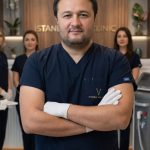
Clinically reviewed by Dr. Harun Eymen Alakaya, MD, hair restoration physician
Key facts
- How long
- Usually 6 to 8 hours, breaks included
- Anaesthesia
- Needle-free numbing, then local
- Awake?
- Yes; sedation only if medically suitable
- Doctor
- 40 to 60 minute consultation; opens every channel
- Patients per doctor
- At most two a day
- You leave with
- Care package, written instructions, guarantee certificate
- Next day
- First wash and check-up at the clinic
Quick answers
Operation day in six answers
How long does a hair transplant take?
Usually 6 to 8 hours including breaks. Fewer grafts take less time; very large sessions may be split over two days.
Does it hurt?
The numbing injections sting briefly. After that most patients feel pressure and movement, not pain, and more anaesthetic is added if an area becomes sensitive.
Am I awake?
Yes. Hair transplants are done under local anaesthetic. Light sedation can be added for the numbing stage if the doctor agrees it is suitable.
Does the doctor do the operation?
The doctor examines you, confirms the plan and personally opens every channel that receives a graft. Specialists extract and place the grafts under the plan.
Can I eat, use my phone or take a break?
Yes. Lunch is served in a break, you can use your phone or headphones for most of the day, and you can ask to pause at any time.
What happens after I leave?
You go back to the hotel with a care package and written instructions, sleep with your head raised, and return the next day for your first wash.
Hour by hour
A typical operation day
An example for a session of about 3,000 grafts. Your coordinator confirms your own times the day before; a larger session starts the same way and finishes later.
08:00
Pick-up or arrivalPatients on a package with transfers are collected from the hotel. Come with washed, product-free hair, after a light breakfast unless you are having sedation.
08:30
Paperwork, health checks and photosYou meet your interpreter, complete your medical form and have an EKG and blood tests. Standard photographs of your scalp are taken from fixed angles so your result can be compared later.
09:30
Consultation with the doctorDr. Alakaya examines your donor area and the zones to restore, reviews your results and medication, and confirms the graft count and technique. This takes 40 to 60 minutes. Ask everything you want to ask; nothing starts until you are comfortable.
10:15
Hairline design and consentYour hairline and treatment areas are drawn on your scalp following the doctor’s plan. You see it in the mirror, adjust it with us and approve it before any graft is taken. You sign the consent forms for the procedure and for anaesthesia.
10:30
Trimming and numbingThe donor area, and the recipient area if your plan needs it, is trimmed. The scalp is cleaned, a needle-free device numbs the surface, and local anaesthetic is given.
10:40
ExtractionYou lie face down while grafts are taken one by one from across the donor area. They go straight into a chilled holding solution, where they are counted and sorted by the number of hairs.
13:00
Lunch breakYou sit up, stretch, eat and use the bathroom. The grafts stay in their solution under the team’s care.
13:40
Channel opening by the doctorThe recipient area is numbed and the doctor opens each channel, setting the angle, direction and density your new hair will follow.
14:40
ImplantationSpecialists place the grafts into the doctor’s channels, single hairs at the front edge and larger grafts behind. You sit semi-upright and can watch a film or listen to music.
16:50
PRP, dressing and final checkYou have PRP prepared from your own blood. The donor area is dressed, and the doctor checks both areas before you get up.
17:30
Instructions and home to the hotelYou receive your care package, written aftercare instructions, the medicines you need and your signed graft guarantee certificate, then go back to the hotel to rest.
The team in the room
Who does each step
Many clinics say “doctor-led” without saying what the doctor does. Here is the same breakdown we publish in our medical standards, for your day.
| Stage | Who | What it means for you |
|---|---|---|
| Health checks | Medical team | EKG and blood tests are reviewed before surgery goes ahead. If a result needs a closer look, surgery waits. |
| Consultation | Dr. Harun Eymen Alakaya | Confirms graft count, technique and priorities after examining you in person. |
| Hairline design | Hairline design specialist | Draws the agreed design on your scalp with you, following the doctor’s plan. |
| Anaesthesia | Medical team with an anaesthesia technician | Needle-free numbing, then local anaesthetic; sedation only after a medical assessment. |
| Extraction | Graft extraction specialists | Grafts are taken one at a time and spread across the donor area as the doctor planned. |
| Channel opening | Dr. Alakaya, personally | The step that decides the angle, direction and density of your new hair. |
| Implantation | Implantation technicians and DHI specialist | Grafts are placed into the channels the doctor opened, or with an implanter pen in DHI. |
| Final check | Doctor | Both areas are checked before you leave. |
Each operating room is used for one patient at a time, and the doctor treats at most two patients a day, so the channel-opening stage is never rushed. Read the full medical standards or meet the doctor and team.
How it feels
Pain, numbing and what you will notice
Most people are more worried about pain than about anything else. The honest answer is that one short stage is uncomfortable and the rest mostly is not.
Scalp surgery is done under local anaesthetic, injected around the area being treated.[1,3] The injections are the part people notice: a sting and a feeling of pressure for a few minutes per area. Techniques such as numbing the surface first, injecting slowly and working from areas that are already numb make this stage much easier.[2,4] We start with a needle-free device that pushes anaesthetic into the surface of the skin before any needle is used.
Once the area is numb, you feel touch, pressure and vibration, and you hear the instruments, but not sharp pain. A long procedure means the anaesthetic is topped up as it wears off; tell the team the moment you feel anything sharp.
If you are very anxious about the injections, light sedation can be added for the numbing stage after a medical assessment. You then need to fast for 6 to 8 hours beforehand.[6]
| Stage | What most people feel |
|---|---|
| Numbing | Brief stinging and pressure, a few minutes per area |
| Extraction | Pressure and tapping at the back; a stiff neck from lying face down |
| Channel opening | Light pressure on the top of the head; usually very little |
| Implantation | Almost nothing; many patients doze or watch a film |
| That evening | Tightness and an ache as the anaesthetic wears off; eased by the painkillers you are given |
| Days 2 to 4 | Some swelling of the forehead is common and settles on its own |
Duration
How long it takes, by number of grafts
Time depends mostly on the number of grafts, but also on your hair: curly, Afro-textured or very fine hair is slower to extract, and DHI placement takes longer per graft than placing into ready-made channels.[1]
The aim is not speed. Grafts are living tissue and survive best when they are handled gently and spend as little time outside the body as possible, kept cool and moist.[5] That is why very large sessions are often split over two consecutive days instead of one very long one.
Not sure how many grafts you need? Try the graft calculator.
| Planned grafts | Typical time in the clinic |
|---|---|
| Up to 2,000 | About 5 to 6 hours |
| 2,000 to 3,000 | About 6 to 7 hours |
| 3,000 to 4,000 | About 7 to 8 hours |
| Over 4,000 | 8 hours or more, or split over two days |
Times include checks, the consultation, lunch and the final check.
Safety
How you and your grafts are looked after
A hair transplant is a minor operation with a low rate of serious complications, and most problems that do occur are small and treatable.[7,8] These are the routines that keep it that way.
You
Before and during surgery
- EKG and blood tests reviewed before anything starts
- Written consent for the procedure and for anaesthesia, in English
- Sterile instruments and a fresh, sterile set-up for every patient
- One patient per operating room
- Pulse and comfort checked throughout; anaesthetic topped up when needed
- An emergency intervention room on site
Your grafts
From extraction to placement
- Kept in a chilled holding solution (IceGraft) from the moment they are removed
- Counted, and sorted by number of hairs, under magnification
- Single-hair grafts saved for the front edge of the hairline
- Placed into channels the doctor has opened for them, without long gaps
- The final count is written on your graft guarantee certificate
Treatment takes place in our Ministry of Health–licensed clinic in Ataşehir, Istanbul. See the clinic and its operating rooms.
Practical questions
Phone, food, breaks and company
During the day
What you can do
You are awake and comfortable for most of the procedure, so you can make it your own day.
- Use your phone, watch films or listen to music, especially during implantation
- Ask for a bathroom break or to change position at any time
- Talk to the team; your interpreter stays with you
- Lunch and drinks are provided; tell us about dietary needs in advance
Company and contact
Who can be with you
A companion is welcome to travel with you, but the operating room is kept for you and the team.
- Your companion can wait in the clinic’s lounge or at the hotel
- They can reach you through the coordinator during the day
- You can message family during breaks
- If you are travelling alone, the team arranges your transfer back
Going home
Leaving the clinic and your first night
What you look like when you leave
The donor area is covered with a light dressing. The recipient area is left uncovered and shows rows of tiny red dots, sometimes with a little pinkish fluid. This is normal. The transplanted area is not touched, rubbed or covered with a tight hat.
What you take with you
- Post-operative shampoo and washing foam
- An absorbent pad for your pillow and a neck pillow
- The medicines you need for the first days, with written instructions
- Written aftercare instructions for sleeping, washing and activity
- Your signed graft guarantee certificate with the number of grafts and the technique
- The 24/7 contact number for the medical team
Your first night
Evening
Rest and eatEat a normal meal, drink water, no alcohol and no smoking. Take the medicines exactly as written.
Bedtime
Head raised, on your backSleep on your back with the neck pillow and your head raised, with the absorbent pad on the pillow. Do not lie on the grafts.
Overnight
A little oozing is normalSome fluid on the dressing or pad is expected. Steady bleeding that does not stop with gentle pressure is not: call us.
Next morning
Back to the clinicYou are collected for your first wash and check-up. The dressing comes off and we show you how to wash at home.
Everything that follows, from sleeping and washing to work and exercise, is in After Your Transplant. The washing routine has its own step-by-step guide.
FAQ
Operation day: more questions
How long does a hair transplant take?
Usually 6 to 8 hours, including the consultation, lunch and the final check. Around 2,000 grafts take about 5 to 6 hours; more than 4,000 can take a full day or be split over two days.
Is a hair transplant painful?
The numbing injections sting for a few minutes; after that, most patients feel pressure rather than pain. We start with needle-free numbing and top up the anaesthetic whenever an area becomes sensitive.
Am I asleep during a hair transplant?
No. It is done under local anaesthetic, so you are awake and can talk and move. Light sedation for the numbing stage is possible if the doctor confirms it is suitable; you then fast for 6 to 8 hours beforehand.
Who actually performs the transplant?
The doctor examines you, confirms the plan, opens every recipient channel and checks the result. Trained specialists extract the grafts and place them into the doctor’s channels.
Can I change the hairline on the day?
Yes. The design is drawn on your scalp and discussed with you before any graft is taken. The doctor will explain if a change would use too many grafts or look unnatural as you age.
Can I use my phone during the operation?
Yes, for most of the day. During extraction you lie face down, so music or a podcast works better; during implantation you can sit up and watch a film.
Do I need to bring food?
No. Lunch and drinks are provided during a break. Tell us in advance if you have dietary needs.
Will my head be bandaged?
Only the donor area has a light dressing, which is removed at your first wash the next day. The transplanted area is left uncovered.
Can I fly home the day after?
Most patients fly after their first wash and check-up, the day after surgery or the day after that. Ask us before booking a flight on the evening of the operation.
Sources
Research behind this page
Medical statements on this page are based on the peer-reviewed sources below, chosen under our editorial policy. Times, team roles and what is included describe how Graftiva Clinic works.
- Jimenez F, Vogel JE, Avram M. CME article Part II. Hair transplantation: surgical technique. J Am Acad Dermatol. 2021;85(4):818-829. PubMed
- Kohn T, Zari S. Local anesthesia techniques in hair restoration surgery. J Cutan Med Surg. 2016;20(6):610-612. PubMed
- Barusco MN. Anesthesia techniques for harvesting via follicular unit excision. Facial Plast Surg. 2024;40(2):175-179. PubMed
- Nusbaum BP. Techniques to reduce pain associated with hair transplantation: optimizing anesthesia and analgesia. Am J Clin Dermatol. 2004;5(1):9-15. PubMed
- Parsley WM, Perez-Meza D. Review of factors affecting the growth and survival of follicular grafts. J Cutan Aesthet Surg. 2010;3(2):69-75. PubMed
- Joshi GP, Abdelmalak BB, Weigel WA, et al. 2023 American Society of Anesthesiologists practice guidelines for preoperative fasting: a modular update of the 2017 guidelines. Anesthesiology. 2023;138(2):132-151. PubMed
- Liu RH, Xu LJ, McCarty JC, et al. A scoping review on complications in modern hair transplantation: more than just splitting hairs. Aesthetic Plast Surg. 2025;49(3):585-595. PubMed
- Garg AK, Garg S. Complications of hair transplant procedures – causes and management. Indian J Plast Surg. 2021;54(4):477-482. PubMed
Next in your guide
Keep reading
Before
Before Your Transplant
What to stop, what to send us and a checklist for the weeks before.
Read more →
Next step
After Your Transplant
Sleeping, washing, work, exercise and the signs to watch for.
Read more →
Free hair analysis
Ready to plan your day?
Answer a few questions about your hair, no photos needed. A doctor reviews your answers and replies with a personal plan, a graft range and how long your operation day is likely to take.