Eyebrows · Istanbul
Eyebrow Transplant in Turkey
An eyebrow transplant moves single hairs from the back of your scalp into a brow shape designed for your face, placing each one at the very flat angle and in the direction of the brow around it. The hairs are your own and grow permanently, but they keep the habits of scalp hair, so you trim them. At Graftiva Clinic in Istanbul we first find out why your brows thinned, because that decides whether a transplant will last.
Clinically reviewed by Dr. Harun Eymen Alakaya, MD, hair restoration physician
Key facts
- Grafts
- Single-hair grafts only
- Donor area
- The back of the scalp
- Extraction punch
- 0.6 to 0.7 mm
- Anaesthesia
- Needle-free numbing, then local
- Crusts
- Gone in 7 to 10 days
- New growth
- From months 3 to 4
- Final result
- 6 to 12 months
- Price
- Packages from $2,500 / €2,000
Quick answers
Eyebrow transplant: the short version
Is an eyebrow transplant permanent?
For brows lost to plucking, scars or injury, transplanted hairs usually keep growing for good. In some scalp conditions, such as frontal fibrosing alopecia, they can be lost again over the years.
Will I need to trim my new brows?
Yes. Hairs taken from the scalp keep growing longer than natural brow hair, so most people trim them regularly.
Will it look natural?
It can, when single hairs are placed one by one at a very flat angle and in the direction of each part of the brow. Direction is the most common reason results disappoint.
Who designs the shape?
We draw the shape with you before surgery, starting from facial landmarks and adjusting it to your face and your remaining brow hairs.
Is it better than microblading?
They do different things. Microblading colours the skin and fades; a transplant grows real hair that needs trimming. Some people use both.
How much does it cost?
Eyebrow transplants are booked within our treatment packages, from $2,500 / €2,000.
Video summary
Eyebrow transplant in 60 seconds
How we check why your brows thinned, how the shape is drawn and approved on your face, and why each single hair is set almost flat in the direction of its zone. The last part covers healing, trimming and price, so you know what the months after the procedure look like.
In this video
Read the transcript
An eyebrow transplant moves single hairs from the back of your scalp into a brow designed for your face. First, we find out why your brows thinned. Gaps from plucking or scars usually suit a transplant. Some conditions can take new hairs again, so diagnosis comes first. Your shape is drawn on your face, from the start of the brow to the arch and the tail, and adjusted until you approve it. Only single-hair grafts are used, taken with a fine 0.6 to 0.7 mm punch and chosen to match your brows. Each hair is placed one by one, almost flat to the skin. Upward at the head, meeting in the body, outward and down at the tail. Crusts clear in 7 to 10 days. New hairs grow from month 3 to 4, and the result is judged at 6 to 12 months. They grow like scalp hair, so you trim them. Packages start at $2,500. Send photos of your brows for a free assessment.
The craft
Why eyebrows are the hardest place to put a hair
A scalp graft can stand at a steep angle among thousands of others. An eyebrow is a few hundred hairs lying almost flat on the skin, each pointing in a direction that changes along the brow. Placement is the whole result.[2,3]
In a study of 100 people unhappy with an eyebrow transplant done elsewhere, the most common problem was uneven density or hairs growing in the wrong direction (41%), followed by sparse brows (36%). In 11% of them, single-hair grafts had not been used at all, and in 5% the new hairs did not match their own brows.[5]
That is why the planning on this page is slow and detailed: direction, angle, single hairs and a shape that suits you.
The angle matters as much as the direction. Scalp hair leaves the skin steeply; eyebrow hair lies almost flat. A graft placed at a scalp angle in the brow stands up and catches the light, which is one of the first things people notice.
An eyebrow hair should lie almost flat and follow the brow, which is why we only use single hairs and place each one individually. A hair set at a scalp angle stands up and catches the light, and that is what makes a brow look transplanted.
Dr. Harun Eymen Alakaya, MDHair Restoration Physician, Graftiva ClinicDiagnosis first
Why your brows thinned decides whether a transplant will work
Eyebrow loss has many causes, from plucking to thyroid disease, and some of them are treatable without surgery.[9] A transplant only lasts when the cause has stopped and the brow skin can hold new hairs.
| Cause | What it usually looks like | Transplant? | What to know |
|---|---|---|---|
| Over-plucking, threading or waxing | Gaps and thin areas where hairs never grew back | Usually yes | The most typical reason people ask. Hairs that have not regrown after years are unlikely to return on their own. |
| Scars and injuries | A gap or line through the brow | Usually yes | Grafts survive well in mature scars: in a 2022 series of 167 patients, average graft survival was 85%, and fewer than 5% needed a second stage.[4] |
| Burns | Smooth, tight skin with little or no hair | Possibly | Deep burn scars give lower density and satisfaction; the scar must be fully mature first.[13] |
| Thin brows by nature | Even, sparse brows since early adulthood | Often yes | Grafts are added between your own hairs to build density and shape. |
| Alopecia areata | Smooth round patches that can come and go | Rarely | Surgery is controversial and only considered after a long stable period; regrowth can be partial.[7] |
| Frontal fibrosing alopecia | Brows thinning together with a receding front hairline | Not advised | Grafts often grow at first but most are lost again after 3 to 4 years.[8] |
| Thyroid or other medical causes | Thinning of the outer brow, often with other symptoms | Treat first | Many medical causes are reversible once treated.[9] |
Unsure which applies to you? Send us close-up photos of both brows and your front hairline. If your hairline is also receding, tell us: it can point to a condition that changes the advice.
Design
How your brow shape is planned
The shape is planned before a single graft is taken, and you approve it. A good transplant with the wrong shape is still the wrong brow.
Landmarks
A classic starting point
The brow traditionally starts above the side of the nose, peaks above the outer edge of the iris and ends on a line from the nose past the outer eye corner.[11] These lines are a guide, not a template.
Women and men
Different natural shapes
Male brows usually sit on the bony ridge, are heavier and have little arch. Female brows sit a few millimetres higher with a clearer peak.[11] A brow with a low head and a sharp high peak can look angry, so we avoid it.
Your brows
Built around what you have
Your remaining brow hairs are kept and the new shape is joined to them. A poor join with existing hair is a known cause of disappointing results.[5]
Your input
Bring your usual brow
If you fill in your brows with makeup, come with them drawn the way you like them, or bring photos. It is the fastest way to agree a shape you will be happy to wear every day.
I never start an eyebrow transplant until you have seen the shape on your own face and said yes to it. Brows change how a face reads, so the drawing matters as much as the grafts.
Dr. Harun Eymen Alakaya, MDHair Restoration Physician, Graftiva ClinicGrafts
Single hairs, placed one at a time
Natural eyebrow hairs grow one by one. That rule decides how grafts are chosen, taken and placed.[2]
Where the hairs come from
Grafts are taken from the back of the scalp with a fine 0.6 to 0.7 mm punch, which leaves very small marks. The doctor selects hairs that are fine and match the colour and curl of your brows as closely as possible; matching curl matters for a natural look.[10]
How many grafts
There is no standard number. Published series range from under a hundred grafts per brow for filling gaps to several hundred for rebuilding a whole brow.[2,8] A 2018 systematic review of eyebrow and eyelash transplantation pooled 67 articles covering 354 patients, so most numbers come from single-clinic series.[1] The doctor estimates your number from your photos and confirms it when the shape is drawn.
How they are placed
Each hair is placed individually, at the flat angle of the brow and in the direction of the zone it goes into. In a 2020 series of 352 patients restored with single-follicular-unit grafts, 320 (91%) had transplanted hairs that grew well, with a satisfactory direction and appearance.[3]
Your options
Eyebrow transplant, microblading or brow tattoo?
They are often compared, but they solve different problems. Many people try makeup or microblading first, and some combine them with a transplant.
| Eyebrow transplant | Microblading | Cosmetic brow tattoo | |
|---|---|---|---|
| What it is | Your own hairs, moved from the scalp | Fine strokes of pigment cut into the skin | Pigment tattooed into the skin as a solid or shaded brow |
| Result | Real hair with texture and movement | Looks like hair strokes from a distance | Looks like filled-in makeup |
| How long it lasts | Permanent in most causes of brow loss | Fades and needs top-ups | Fades and can change colour over the years |
| Upkeep | Regular trimming | Touch-up sessions | Touch-ups or removal |
| Recovery | Crusts for 7 to 10 days; growth from month 3 | A short healing period | A short healing period |
| Main risks | Wrong direction or density if done poorly; hairs need trimming | Skin reactions; rare granulomatous reactions have been reported[12] | Colour change, allergic reactions, difficult removal |
If you have an old tattoo or microblading, tell us. The doctor checks the skin, and pigment can be covered by new hair once the brow is established.
Your visit
What happens on the day
Step 1
Consultation and design
A 40 to 60 minute consultation with the doctor. Your brow shape is drawn, adjusted and photographed until you approve it.
Step 2
Numbing
Needle-free numbing first, then local anaesthesia in the brow and donor areas. Sedation is available in the Deluxe package after a medical assessment.
Step 3
Taking the grafts
Single hairs are taken from the back of the scalp with a 0.6 to 0.7 mm punch.
Step 4
Placing the hairs
Each hair is placed one by one, at the angle and in the direction of the brow zone it goes into.
Step 5
Before you leave
Your brows and donor area are checked and you receive written aftercare instructions.
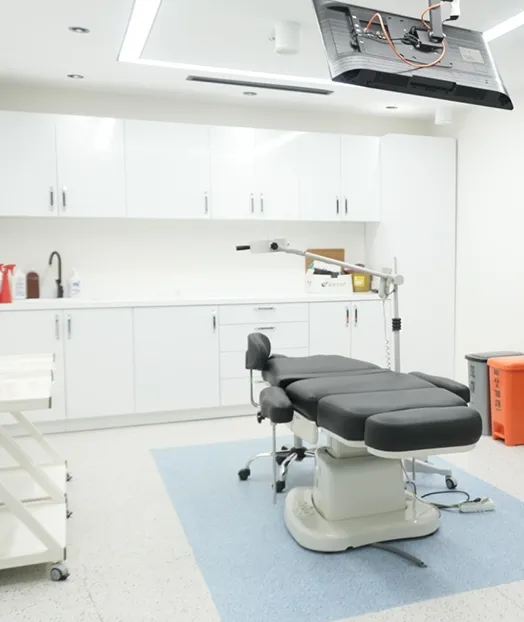

Each doctor treats at most two patients a day. See the clinic.
After surgery
Recovery and living with transplanted brows
The first weeks
- Redness, mild swelling and small crusts are normal; the crusts are usually gone in 7 to 10 days
- Do not touch, rub or pick the brows while they heal
- No makeup on or around the brows until the doctor clears it
- Avoid long sun exposure, heavy exercise and swimming while the skin heals
- Around the first month most transplanted hairs shed. This is expected; they regrow from months 3 to 4
For the long term
Transplanted hairs keep growing like scalp hair and are trimmed regularly.[6,7] Many people also set the direction with a little brow gel in the morning while the new hairs settle.
Some brows look sparse at six months and fill in later; a small number of people choose a touch-up session for density.[3,10] The final result is judged at 6 to 12 months.
Risks
What can go wrong, and how we reduce it
Eyebrow transplants have low complication rates in published reviews.[1] The problems people regret are mostly about appearance, not health, so that is where most of our care goes.
| Problem | Why it happens | How we reduce it |
|---|---|---|
| Hairs in the wrong direction or standing up | Channels opened too steeply or ignoring the zones of the brow | Every hair placed at the flat brow angle, zone by zone[5] |
| Uneven or sparse density | Poor graft survival or too few grafts for the shape | A realistic plan from the start; a touch-up is sometimes advised once the result has matured[3,10] |
| Tufted look | Two- or three-hair grafts placed in the brow | Single-hair grafts only[2,5] |
| Hairs that do not match | Donor hairs too thick, curly or different in colour | Donor hairs selected for fineness, colour and curl[5,10] |
| Inflamed or ingrown hairs | Folliculitis around new hairs, more often in scarred skin | Clean aftercare and early check of any red spots; in one large series it affected about 1% of patients[3] |
| Temporary redness, swelling and crusts | Normal healing | Usually settle within 7 to 10 days |
Honesty first
When we advise against it
- Brow loss from a condition that is still active, such as alopecia areata or frontal fibrosing alopecia
- A medical cause, such as thyroid disease, that has not been treated
- Skin problems or infection in the brow area
- Not enough suitable donor hair
- Hair pulling (trichotillomania) that is still active; treating it comes first
- Recent or ongoing chemotherapy; brows often regrow once treatment ends
- Expectations a transplant cannot meet, such as brows that never need trimming
If any of these apply, we tell you before you travel and explain what could change the answer.
Your team
Who will treat you
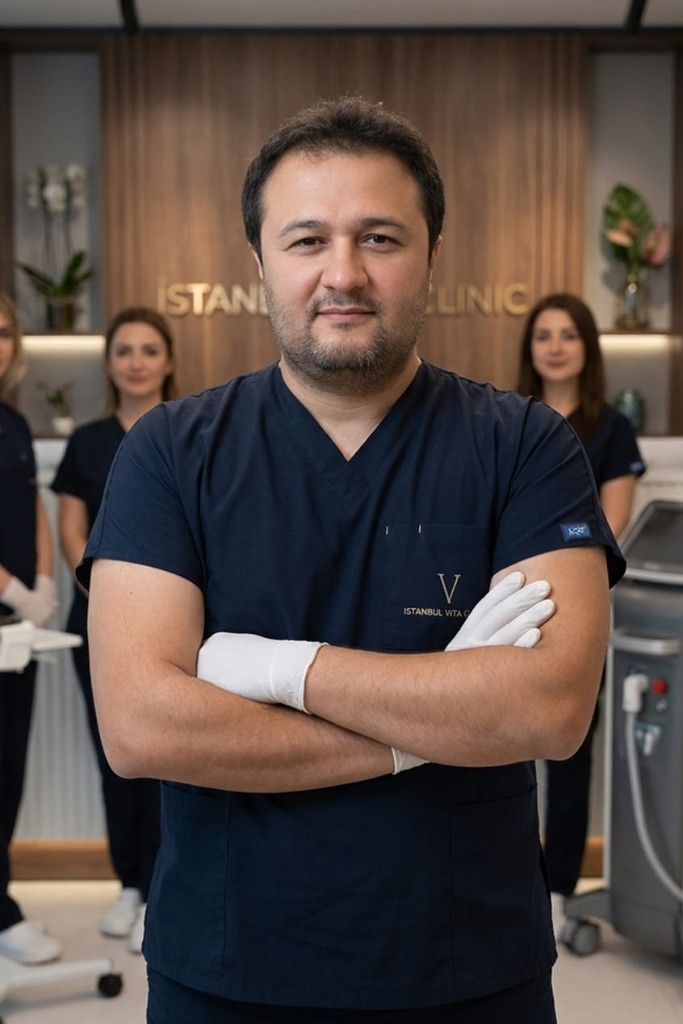
Lead doctor
Dr. Harun Eymen Alakaya, MD
Diagnoses the cause of your brow loss, decides whether a transplant is right and leads the procedure.
Cost
Eyebrow transplant cost in Turkey (2026)
Eyebrow transplants are booked within our treatment packages. The price is set before you travel and does not change with the number of grafts.
| Package | USA & Canada | Europe | Main differences |
|---|---|---|---|
| Standard | $2,500 | €2,000 | Treatment, health checks, aftercare and 12-month follow-up |
| Premium | $3,200 | €2,800 | Adds a 2-night hotel stay and VIP airport, hotel and clinic transfers |
| Deluxe | $4,000 | €3,500 | Adds sedation when medically suitable, stem cell therapy and a 3-night 5-star hotel stay |
Every package includes the consultation, EKG and blood tests, PRP and mesotherapy, two oxygen therapy sessions, the aftercare package, a Graft Guarantee Certificate, 12 months of online follow-up with 24/7 medical assistance, and an in-clinic translator. Flights are not included.
FAQ
Eyebrow transplant: frequently asked questions
Is an eyebrow transplant painful?
The area is numbed first with a needle-free system and then with local anaesthesia, so you should feel pressure rather than pain during the procedure. Mild soreness and swelling for a few days afterwards is common.
Do transplanted eyebrow hairs fall out?
Most transplanted hairs shed around the first month. This is expected: the roots stay in place and new hairs start growing from months 3 to 4. The final result is judged at 6 to 12 months.
Why do transplanted eyebrows need trimming?
The hairs come from the scalp and keep their scalp growth habit, so they grow longer than natural brow hair. Most people trim them regularly, usually at home.
How many grafts will I need?
It depends on whether you are filling gaps or rebuilding a whole brow, and on the shape you choose. The doctor estimates it from your photos and confirms it when your shape is drawn.
Can I have an eyebrow transplant if I have alopecia areata?
Usually not. Alopecia areata can return and affect the new hairs, and surgery for it is still debated. It is only considered after a long period with no activity, and results can be partial.
My hairline is receding and my brows are thinning. Can I have a transplant?
Please tell us and send photos of both. This combination can be a sign of frontal fibrosing alopecia, in which transplanted brow hairs are often lost again after a few years. A diagnosis comes first.
Can I have a transplant over microblading or a brow tattoo?
Often, yes. Tell us what was done and when; the doctor checks the skin before planning, and new hairs can cover old pigment once established.
When can I wear makeup again?
Not on or around the brows until the skin has healed and the doctor clears it. Makeup elsewhere on the face is usually fine if you keep it away from the brows.
Can men have eyebrow transplants?
Yes. Male brows are planned lower, flatter and heavier than female brows, and the shape is designed to suit a male face.
Will the donor area be visible?
Only a small number of single hairs is needed, taken with a fine punch from the back of the scalp, so the area is usually hidden by the surrounding hair.
Are “eyebrow implants” the same as an eyebrow transplant?
Yes. “Eyebrow implants” is a common name for an eyebrow hair transplant: your own hairs are moved from the scalp. No artificial hair or implant is used.
Can I combine an eyebrow transplant with a scalp hair transplant?
Tell us if you are considering both. Both use the same donor area at the back of the scalp, so the doctor plans the total number of grafts together and advises whether one day or two makes sense.
How long do I need to stay in Istanbul?
The procedure is done in one day. The doctor confirms with you how long to stay for your check-up before you fly home.
Sources
Research behind this page
Medical statements on this page are based on the peer-reviewed sources below, chosen under our editorial policy. Information about how we work comes from our own clinical practice.
- Klingbeil KD, Fertig R. Eyebrow and eyelash hair transplantation: a systematic review. J Clin Aesthet Dermatol. 2018;11(6):21-30. PubMed
- Rajput RJ. Hair transplant for eyebrow restoration. Indian J Plast Surg. 2021;54(4):489-494. PubMed
- Jiang W, Wang M, Wang B. Clinical outcomes and technical tips for eyebrow restoration using single-follicular-unit hair transplantation: a case series review. J Cosmet Dermatol. 2020;19(8):2057-2060. PubMed
- Chen J, Qu Q, Ye K, et al. Natural reconstruction: a comprehensive standardized operating procedure for restoring eyebrow loss due to scarring. Plast Reconstr Surg. 2022;150(4):877-886. PubMed
- Chen L, Li Z, Liu X, Yang J, Jiang W. Clinic analysis and effective improvement tips for poor eyebrow transplantation. Aesthetic Plast Surg. 2024;48(23):4769-4777. PubMed
- Li K, Sun P, Liu F, Hu Z, Miao Y. Frontal-temporal triangle area hair for eyebrow restoration in Asians: a comparative study with periauricular and occipital hair. Dermatol Surg. 2022;48(7):731-736. PubMed
- Civaş E, Aksoy B, Aksoy HM, Eski M, Yucel K. Hair transplantation for therapy-resistant alopecia areata of the eyebrows: is it the right choice? J Dermatol. 2010;37(9):823-826. PubMed
- Audickaite A, Alam M, Jimenez F. Eyebrow hair transplantation in frontal fibrosing alopecia: pitfalls of short- and long-term results. Dermatol Surg. 2020;46(7):922-925. PubMed
- Kumar A, Karthikeyan K. Madarosis: a marker of many maladies. Int J Trichology. 2012;4(1):3-18. PubMed
- Park JH, Kim NR, Manonukul K. Eyebrow transplantation using long hair follicular unit excision technique. Plast Reconstr Surg Glob Open. 2021;9(5):e3598. PubMed
- Yalçınkaya E, Cingi C, Söken H, Ulusoy S, Muluk NB. Aesthetic analysis of the ideal eyebrow shape and position. Eur Arch Otorhinolaryngol. 2016;273(2):305-310. PubMed
- Ibraheim MK, Desai M, Tawfik M, Elsensohn A, Furukawa B. Microblading-induced granulomatous reaction: case report and review of the literature. Am J Dermatopathol. 2023;45(7):487-491. PubMed
- Ali RA, Fayek M, Noureldin M, El-Essawy NM. Eyebrow restoration in deep facial burn: follicular unit extraction hair transplantation after nanofat graft. Plast Reconstr Surg Glob Open. 2023;11(10):e5331. PubMed
Keep reading
Related information
Facial hair
Beard Transplant
Single-hair placement and face-framing design for beards and moustaches.
Read more →
For women
Female Hair Transplant
Thinning partings, high hairlines and keeping your length.
Read more →
Free hair analysis
Find out how many grafts you need
Answer a few questions about your hair, no photos needed. A doctor reviews your answers and replies with a personal plan.